Makapala, North Kohala, Hawaiʻi Island · October 19–21, 2017

Master Cho on the Nutritive Cycle

Three days in a Makapala hall with Master Cho Han-kyu: when to feed a crop, what to feed it, and why. All seven recorded sessions are here as they happened. His Korean is translated again and checked, so you can read what he said, not only what the room heard.

Read the whole seminar in one page →

Topics microbes nutritive cycle livestock history timing soil food philosophy structure medicine rice cleanser fruit trees protectors reproduction corn Clear

18 parts on “microbes”

Master Cho Han-kyu, interpreted by Kim Chang ·58:06 ·18 min Korean, translated

Microbes Digest, You Absorb: Keep Microbes and Feed Local

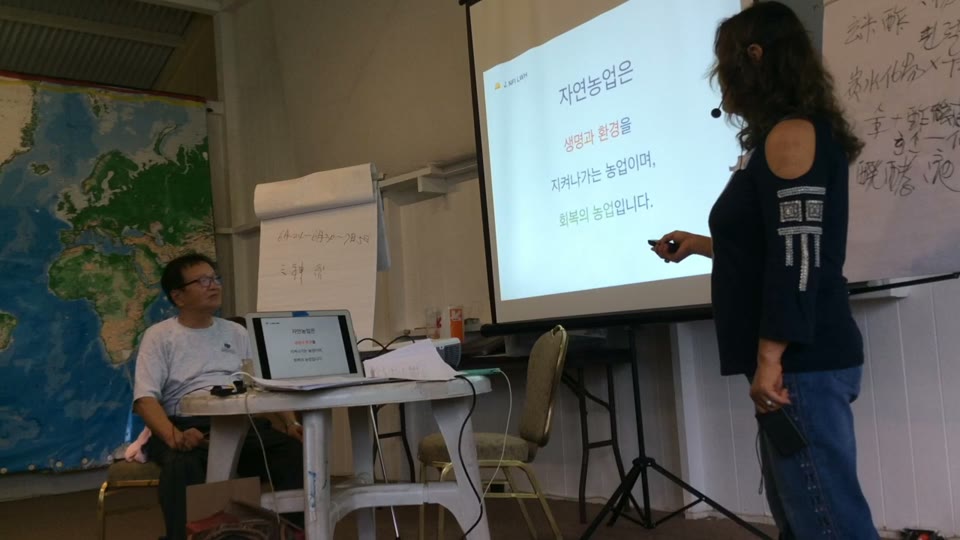
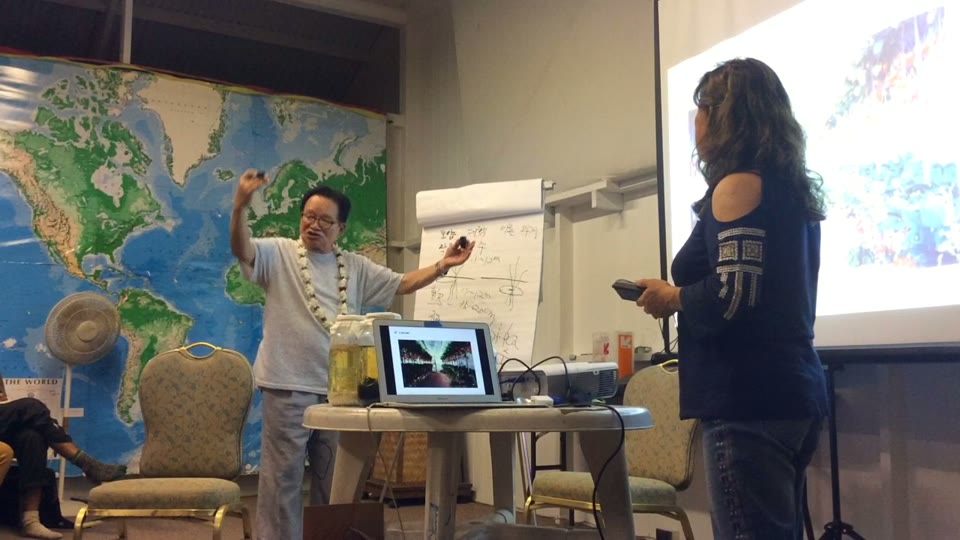
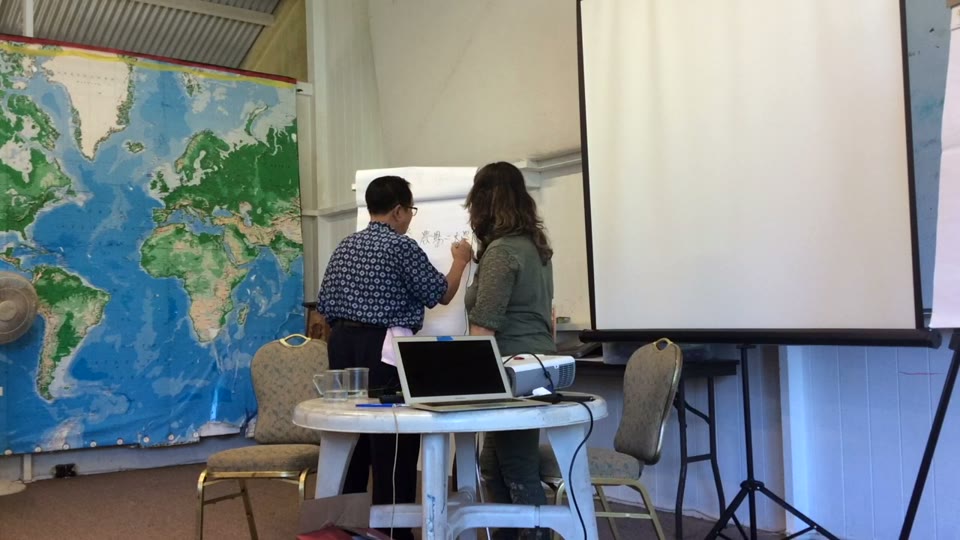
Seated now, Cho says a crop is a living being made of the same sun, air, water and soil as us, so farming starts with humility: 'natural farming is love'. He writes three chi and three heats on a fresh flip-chart page and says body heat is fermentation heat, because microbes digest our food and we absorb what they make. From there: collect microbes near you, and feed livestock what is made here, not shipped in.
Taught If this doesn't land, redo levels 1, 2 and 3.

microbes protectors livestock feed fermentation philosophy

Master Cho Han-kyu, interpreted by Kim Chang ·1:16:11 ·33 min Korean, translated

Plump, Slim, Plump Again: Feed Every Stage

Cho walks through how a child goes plump, slim and plump again with age, and says young paprika, tomato, papaya, pigs and chicks should be raised plump too. Miss the balance at the changeover and the crop gets sick, so he has had his stage-by-stage chart translated for this level-3 seminar. Then fermentation heat (an IMO 4 pile runs 60-70 °C), a seminar notice, and an open Q&A: seawater 1:30 for all crops, salt blocks, no seawater nearby, and 'the crop is the professor'.

Taught People go plump at 2-4, slim at 5-6, plump at 10-13, slim at 14-16, plump then thin at 19-21.

nutritive cycle minerals microbes livestock tomato paprika

Joe McGinn ·0:00 ·28 min

Brown Sugar + Rice = the Whole Toolbox

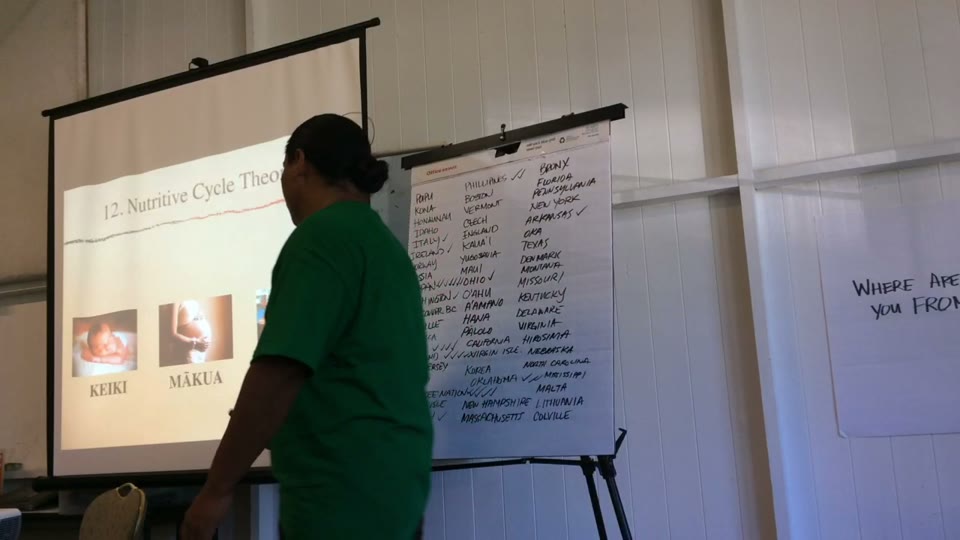
Joe McGinn opens the afternoon by asking everyone where their grandparents are from, then walks through Cho's principles of natural farming in slides, read through a Hawaiian lens. He ends on a simple point: every solution rests on brown sugar or on rice vinegar, so anyone can start, beginning with Food (FPJ).

Taught Supermarkets and tractors came in around the 1930s, so grandparents born before then farmed without machines or chemical fertilizer

history nutritive cycle microbes food cleanser hawaii

Drake Weinert ·1:00:49 ·37 min

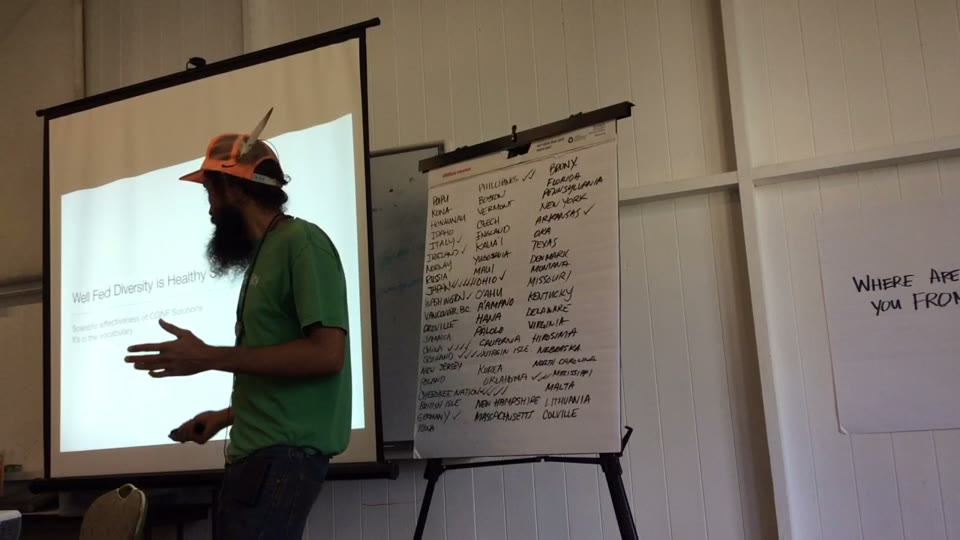
Well-Fed Diversity = Healthy Soil: KNF in Scientists' Words

Drake Weinert brings back what soil scientists said at the Hawaii Farmers Union state convention and maps it onto Cho's solutions: Microbes (IMO) as biodiversity, Food (FPJ) as concentrated root exudates, fungi that build soil aggregates. Then questions: why FPJ is like an exudate, fixing deficiencies, the fungus-to-bacteria ratio, sprayers, and spraying a mixed garden where crops sit at different stages.

Taught Microbes (IMO) = biodiversity; tell a scientist that and you're speaking their language

soil microbes food fungi nutritive cycle science

Drake Weinert ·1:38:17 ·27 min

Teach It as You Got It: Lineage and Certification Levels 0–5

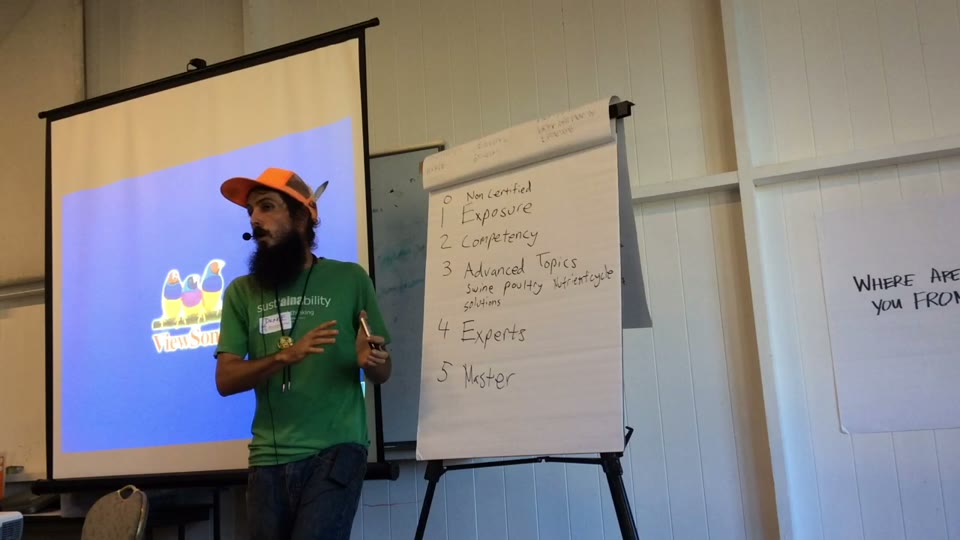
Asked whether apple wine can stand in for makgeolli in Medicine (OHN), Drake gives the general rule and argues for teaching the recipe as received and keeping local changes labelled. Then he writes the certification ladder on the flip chart, levels 0 to 5, and explains who may certify whom; the room asks for shared teaching materials.

Taught Certification levels: 0 non-certified, 1 exposure, 2 competency, 3 advanced topics, 4 experts, 5 master

certification teaching medicine microbes lineage cgnf

Master Cho Han-kyu, interpreted by Kim Chang ·2:05:29 ·22 min Korean, translated

Liquor + Air = Vinegar: Make It From What Grows Here

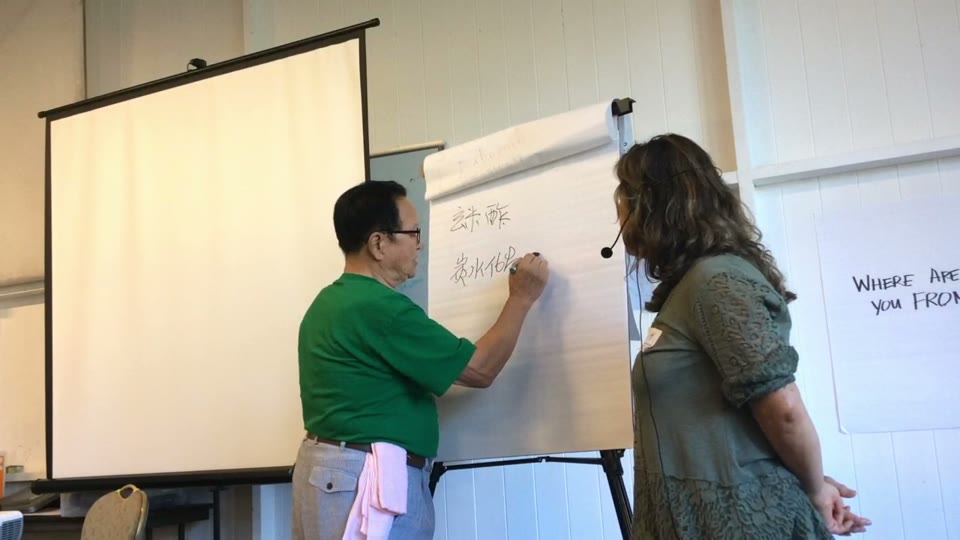
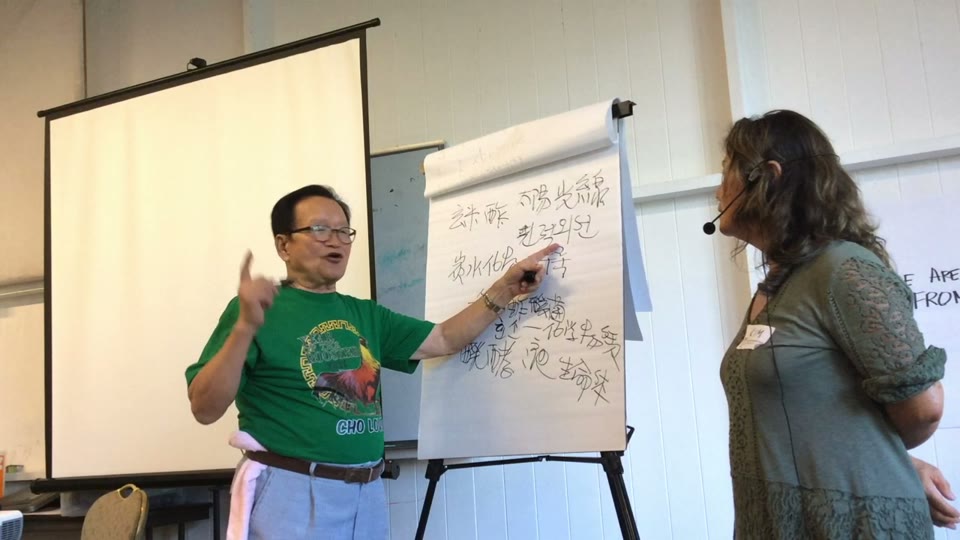
The question held since Joe's talk comes back: must the vinegar be brown rice vinegar? Kim Chang, the interpreter, answers first in her own voice (4-5% acidity, and why competency matters), then Cho takes the flip chart. Don't insist on brown rice: carbohydrate plus nuruk makes liquor, the air's acetic acid bacteria turn it to vinegar in 3 to 5 days, and the material sets the quality. He adds coconut vinegar, a little cooked brown rice in banana liquor, why koji isn't IMO, and why brown rice beats white.

Taught Use local material for vinegar; it needs at least 4 to 5% acidity

cleanser vinegar microbes local materials banana coconut

Master Cho Han-kyu, interpreted by Kim Chang ·2:27:23 ·31 min Korean, translated

Living Liquid, Not Enzyme: Collect at Dawn, Face South

Cho says what we make isn't an enzyme but a living fermented liquid, and tells the loaves and fishes as a picture of how one lump of Microbes covers 6,000 pyeong. He weeps, then says farming is done with love, not technique. The practical core: collect material when the plant holds the most of nature's power, in the morning, and collect IMO where the first sun falls; sunlight's far-infrared growth ray is why sprouts face south. He ends on three sets of parents: the crops that raise you, so pesticide is parricide.

Taught One fist-sized lump of Microbes (IMO) can be multiplied for about 6,000 pyeong

microbes food timing collection sunlight philosophy

Master Cho Han-kyu, interpreted by Kim Chang ·3:27:08 ·27 min Korean, translated

Charcoal + Microbes, No Deep Hole: Lava to Soil in 6 Months

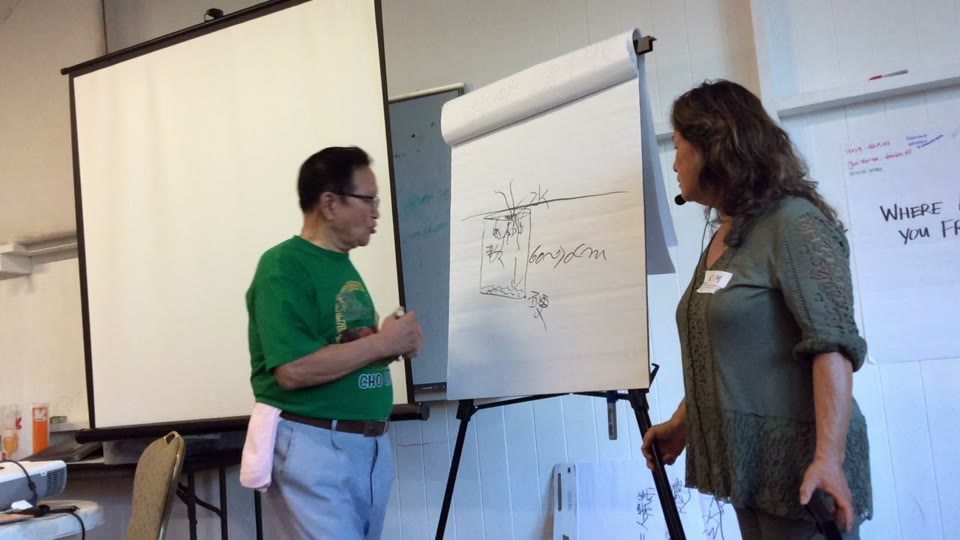
Cho draws the deep planting hole JICA used in Tanzania, 60 to 70 cm with fertilizer at the bottom, the way Hawaiʻi is told to plant fruit trees, and shows four ways it kills the tree. His way: no water, five lumps of charcoal on top and IMO4 over them. Then raising seedlings in poor soil before rich, and the Kona lava field he turned to 3 cm of soil in six months with charcoal, IMO4, corn and the Type 2 feed. The session ends with a cheer and dinner.

Taught JICA in Tanzania planted trees in holes 60 to 70 cm deep, fertilizer at the bottom, watered on top

microbes soil trees planting charcoal seedlings

Master Cho Han-kyu, interpreted by Kim Chang ·56:58 ·17 min Korean, translated

Raise Microbes, Moles Drain the Soil: Macadamias +20% a Year

From a drawing of a plant, Cho traces the food chain under it: the leaf feeds the root, root waste feeds microbes, microbes feed earthworms, earthworms draw moles, and mole tunnels air the soil. He tells how Chris Trump's waterlogged macadamia orchard in Kohala came back that way, and how a paste of soil and Microbes (IMO4) healed trunk wounds. Then soil is the crop's mother, and Tanya leads a qigong break.

Taught 150,000 to 200,000 microbes live on one square centimeter of leaf

microbes soil earthworms drainage macadamia orchards

Master Cho Han-kyu, interpreted by Kim Chang ·1:13:44 ·33 min Korean, translated

Microbes 1 → 4: Bamboo Grove to 150 kg per 300 Pyeong

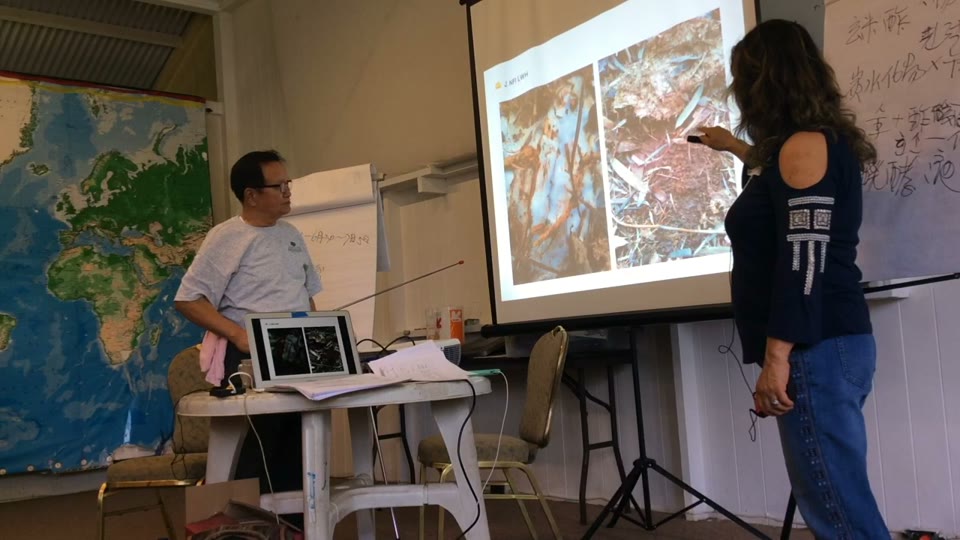
Cho walks through his Microbes (IMO) slides: the starter caught under bamboo, IMO2 with equal sugar, IMO3 on rice bran, and IMO4 made with half field soil so the local microbes meet their relatives. He says natural farming restores soil in two months where organic takes one to two years, then shows IMO4 spread at 150 kg per 300 pyeong in a Korean greenhouse: white film, earthworms, risen soil, and a 180 cm stick that goes all the way in.

Taught Chewed bamboo root gives sweet juice for 15 minutes; microbes love sweet, so they crowd into bamboo groves

microbes imo soil bamboo organic farming greenhouse

Master Cho Han-kyu, interpreted by Kim Chang ·1:46:24 ·35 min Korean, translated

Till Shallow, Roots Go Deep: Corn Mulch, Cabbage, Rice

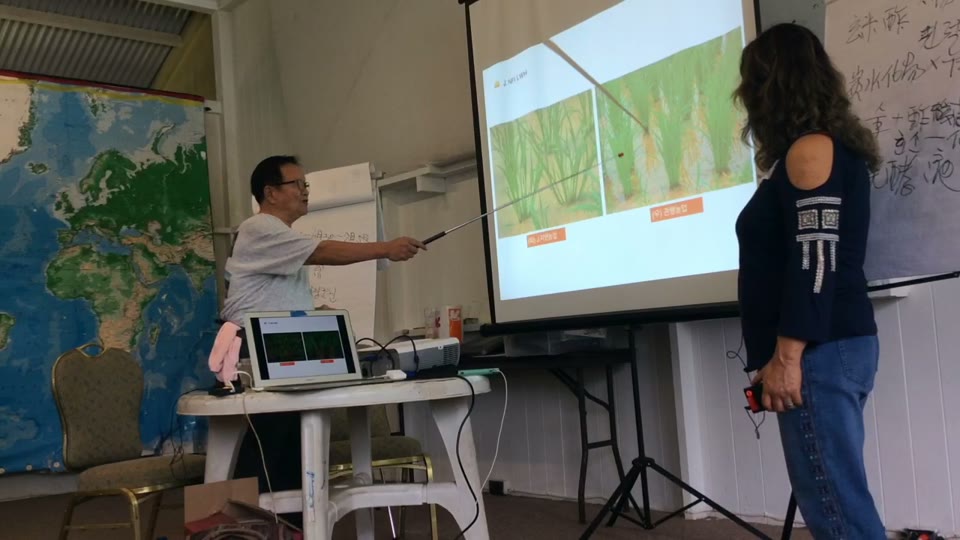
Cho shows how to grow grass to control grass: in Hawaiʻi, corn cut at a meter and laid down over IMO4, with cabbage and melons planted through it. Paired rice photos follow: 2–3 seeds a hill against 8–12, a murky paddy with loaches and no herbicide. He argues deep tilling makes shallow roots, sends out the four nutritive-cycle handouts after a qigong break, runs a pull test with the room, and ends on professors who teach the past.

Taught Cut the corn at about 1 m and lay it down; 6–7 cm of cover stops grass

mulch no-till tillage rice cabbage microbes

Master Cho Han-kyu, interpreted by Kim Chang ·0:00 ·37 min Korean, translated

Fat Tree, Empty Fruit: The IMO5 Ring at the Drip Line

Cho opens with plans: next time he wants to walk farms and diagnose crops, and he wants Hawaiʻi visitors to eat on natural farms. Then he cuts open the mangosteen a participant gave him. It's nearly empty, because the tree was overfed when young and lacked calcium phosphate the July before. His fix is IMO4 mixed 1:1 with vinegar-moistened bone char, spread in a ring at the drip line ahead of flowering; the room's questions settle what the 1:1 means.

Taught IMO5 = IMO4 mixed 1:1 with bone char moistened with brown rice vinegar

microbes structure cleanser nutritive cycle fruit trees mangosteen

Master Cho Han-kyu, interpreted by Kim Chang ·37:10 ·22 min Korean, translated

See Half, Farm Half: The Eightfold Path on the Board

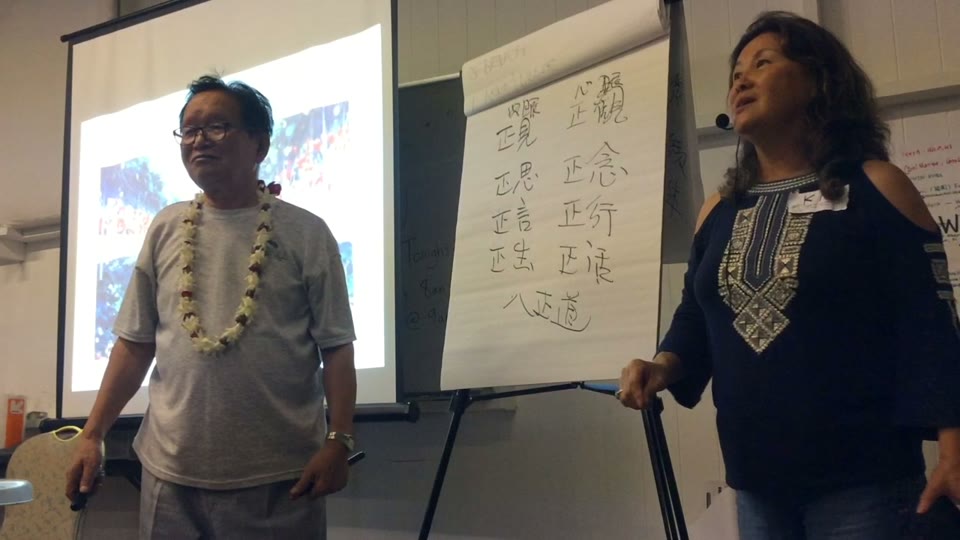
Cho writes the Eightfold Path on the flip chart: see rightly, think rightly, speak rightly, live rightly, first alone and then with others. The eye sees only half, and farming by the outward shape is what made the mangosteen rotten inside. Then religion, a plan to record his farm visits, his fee (a tenth of the extra profit) and one last IMO5 question.

Taught IMO5 goes at the drip line

philosophy nutritive cycle microbes fruit trees mangosteen observation

Master Cho Han-kyu, interpreted by Kim Chang ·59:30 ·38 min Korean, translated

What a Crop Can Do: 8,000 Tomatoes, 14-Brix Papaya

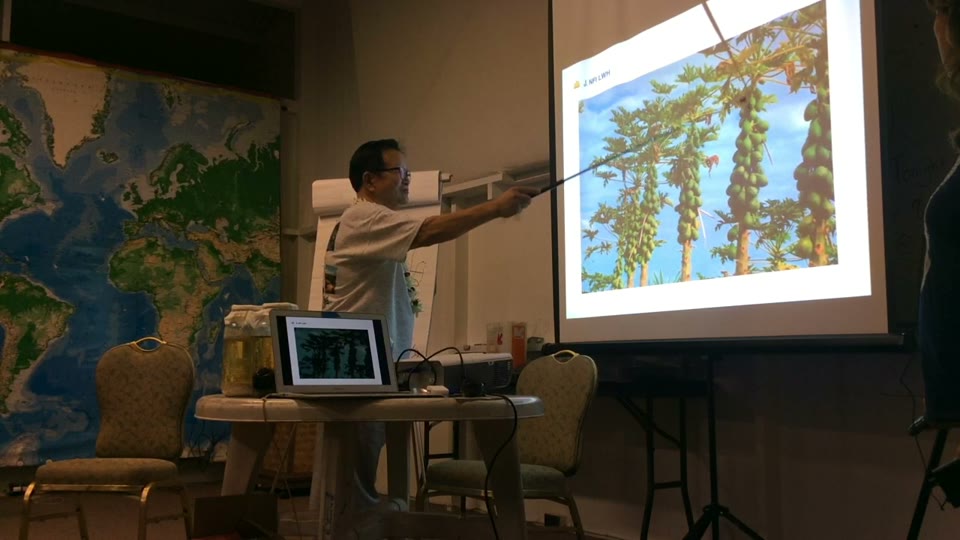
Cho points at the bubbling jars (alive, so never seal them in plastic), then takes an aside on crocks and a water machine from Korea. Then his slides of what crops can do: a 15-year grape vine, his 8,000-tomato plant, a Hilo papaya fruiting down the trunk on IMO4 alone, papaya brix, a Thai longan grove saved with a beer-and-vodka stopgap, chili, banana and taro on IMO4. He ends with a Korean field trial where Natural Farming got the worst field and the biggest harvest.

Taught One 15-year grape vine bore 3,600 bunches; the record vine bore 15,000

microbes minerals medicine fruit trees papaya brix

Master Cho Han-kyu, interpreted by Kim Chang ·1:37:15 ·35 min Korean, translated

Chicks on Brown Rice, Hens on Green Corn, Sun on the Floor

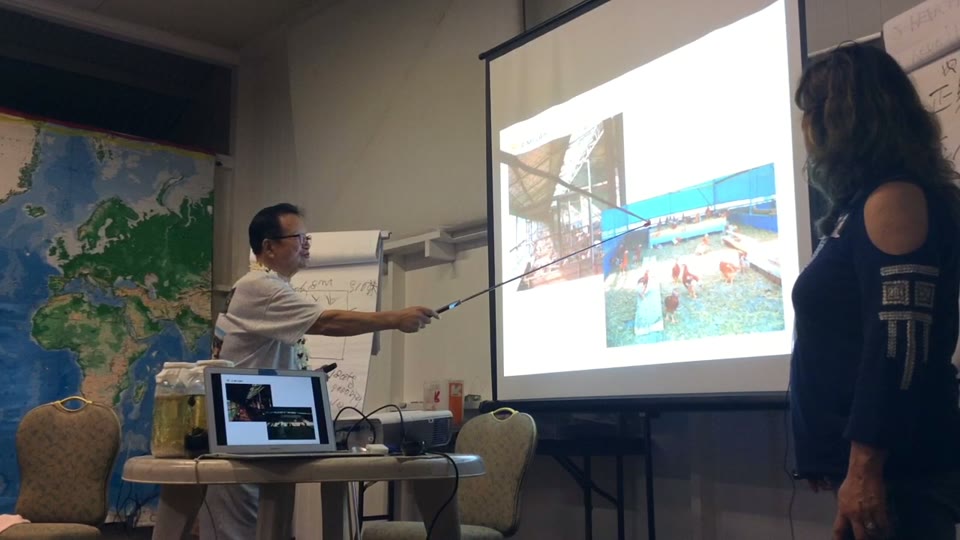
The livestock section starts. Cho shows his self-ventilating pen and skylit chicken house, then raises chicks: brown rice first, the 3-day yolk, egg yolk with bamboo leaves, then greens like a cow. Green corn chopped and fermented with IMO4, LAB and grape yeast becomes feed; his feed-plot arithmetic gets checked by the room. He ends on the layer house: openings at 36 cm, sun across the floor once a day, and a rice-straw floor with no flies and no smell.

Taught A Hawaiʻi farmer with 15,000 chickens: IMO4 alone, no smell, no disease

livestock poultry microbes protectors feed corn

Master Cho Han-kyu, interpreted by Kim Chang ·2:30:05 ·28 min Korean, translated

A Yolk You Can Lift: Hen Houses and Egg Tests

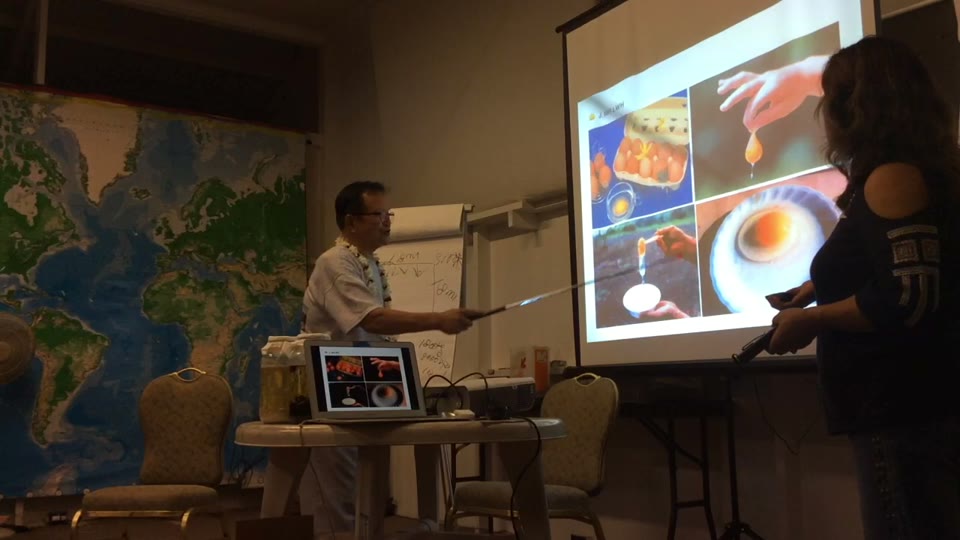
It's past 9 pm and Cho keeps going through his poultry slides: soil floors and dust baths, Korea's pesticide eggs, the hen that roosts highest, broody cages, dark laying boxes and rice hulls. He shows home-made feed, pig feed from broiler litter, and how to test an egg: lift the yolk, look for three layers, pull it with a toothpick. Then blood spots, red paper against pecking, dissected birds and darker yolks from purple sweet potato.

Taught Korea's 2017 pesticide eggs: caged hens get mites, so pesticide went into the feed

livestock poultry eggs microbes protectors feed

Master Cho Han-kyu, interpreted by Kim Chang ·2:58:22 ·20 min Korean, translated

Sawdust + IMO4 = A Pig Pen Nobody Cleans for 3 Years

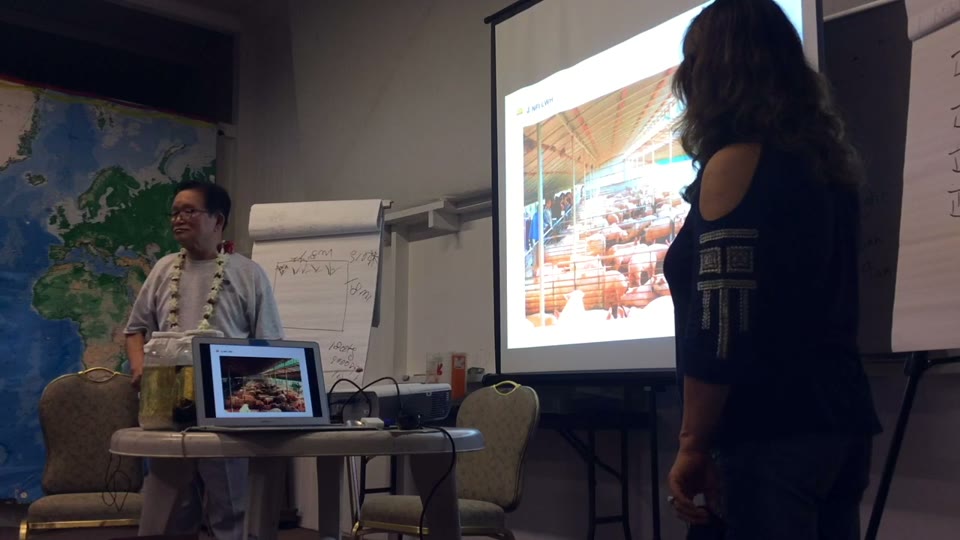
Fifteen more minutes of slides, now pigs. Cho shows the wing-curved roof, houses 2 m apart with perilla between, and the floor bed of logs, sawdust and IMO4 that lets one housewife keep 300 pigs with no cleaning for 3 years. Then free sow pens, a Chinese pen at minus 40, a fermented feed box, food scraps and pig dung turned into feed, piglets on the first nipple, and a stress-hormone slide. The session ends: 'that is love', and the rest tomorrow.

Taught Space houses so the front one's shade never falls on the next: about 2 m

livestock pigs microbes housing feed floor bed

Master Cho Han-kyu, interpreted by Kim Chang ·0:00 ·30 min Korean, translated

Corn + IMO4 = No Till, No Weeds; Then a Four-Season Farm

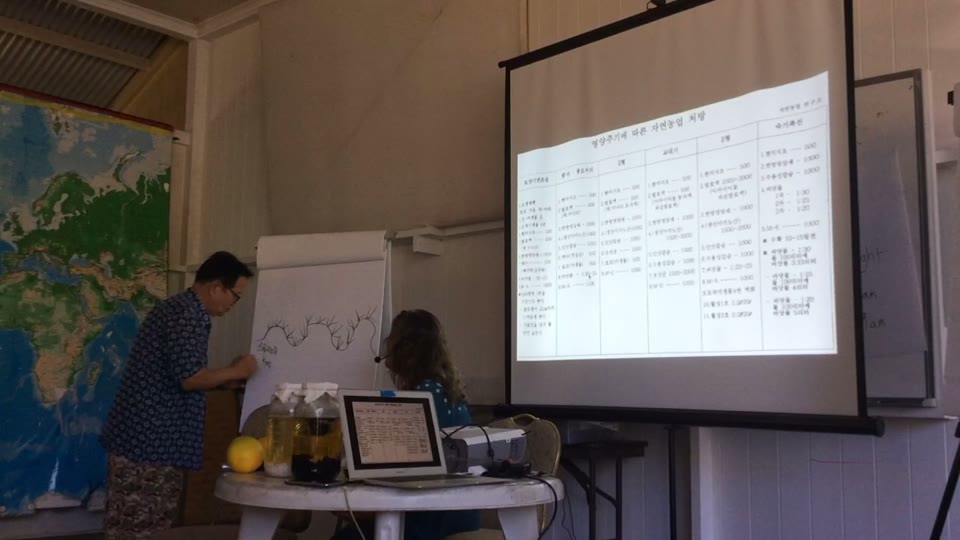
Back at the projected prescription table, Cho goes over the first two columns again: a corn cover crop with Microbes (IMO4) under it, laid down as no-till mulch, and the seedling soak. Then he leaves the table for his picture of a Natural Farming farm in Hawaiʻi that visitors come to: something blooming or fruiting in every season, a guesthouse, good food, and a place to learn.

Taught At about two months, cut the corn and lay it flat; the layer is about 7 cm

soil microbes seeds cover crop mulch fruit trees