Makapala, North Kohala, Hawaiʻi Island · October 19–21, 2017

Master Cho on the Nutritive Cycle

Three days in a Makapala hall with Master Cho Han-kyu: when to feed a crop, what to feed it, and why. All seven recorded sessions are here as they happened. His Korean is translated again and checked, so you can read what he said, not only what the room heard.

Read the whole seminar in one page →

Topics microbes nutritive cycle livestock history timing soil food philosophy structure medicine rice cleanser fruit trees protectors reproduction corn Clear

2 parts on “mulch”

Master Cho Han-kyu, interpreted by Kim Chang ·1:46:24 ·35 min Korean, translated

Till Shallow, Roots Go Deep: Corn Mulch, Cabbage, Rice

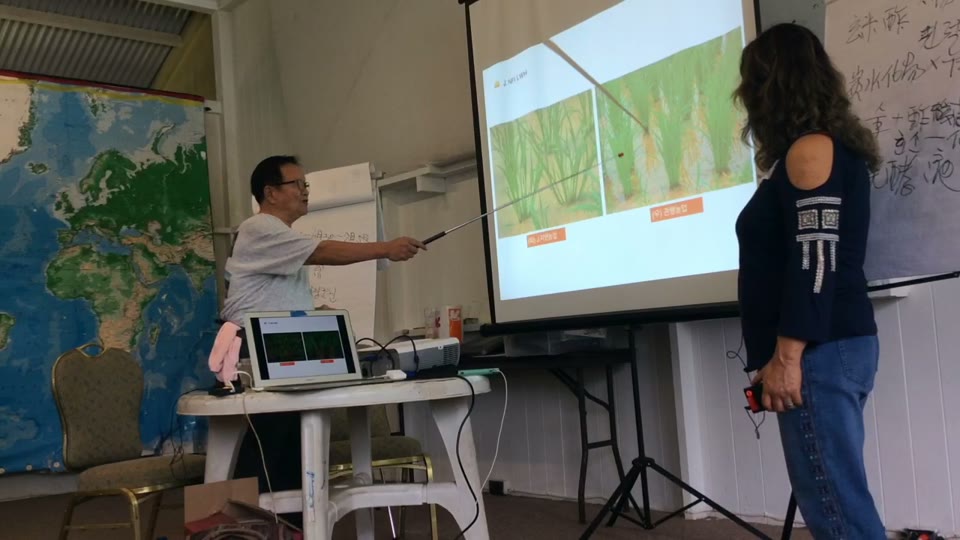
Cho shows how to grow grass to control grass: in Hawaiʻi, corn cut at a meter and laid down over IMO4, with cabbage and melons planted through it. Paired rice photos follow: 2–3 seeds a hill against 8–12, a murky paddy with loaches and no herbicide. He argues deep tilling makes shallow roots, sends out the four nutritive-cycle handouts after a qigong break, runs a pull test with the room, and ends on professors who teach the past.

Taught Cut the corn at about 1 m and lay it down; 6–7 cm of cover stops grass
mulch no-till tillage rice cabbage microbes

Master Cho Han-kyu, interpreted by Kim Chang ·0:00 ·30 min Korean, translated

Corn + IMO4 = No Till, No Weeds; Then a Four-Season Farm

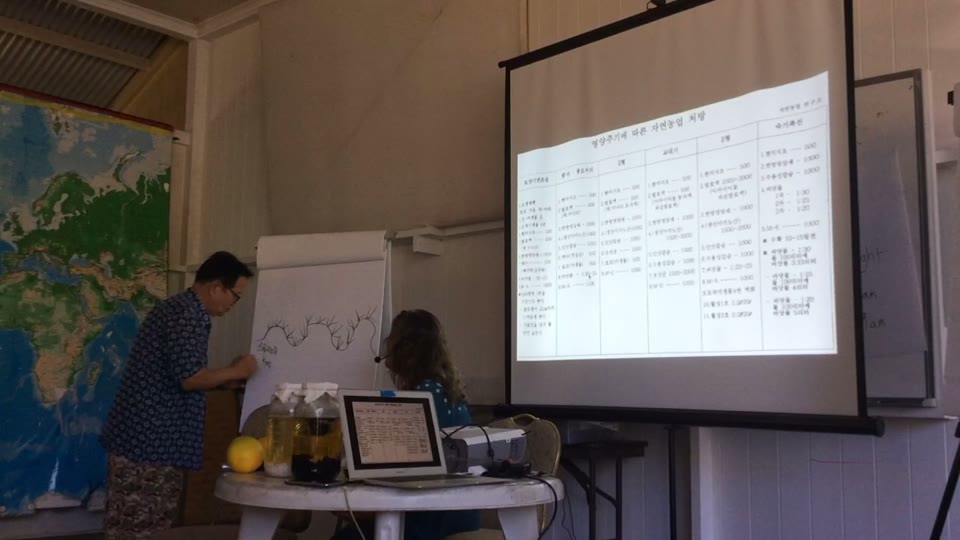
Back at the projected prescription table, Cho goes over the first two columns again: a corn cover crop with Microbes (IMO4) under it, laid down as no-till mulch, and the seedling soak. Then he leaves the table for his picture of a Natural Farming farm in Hawaiʻi that visitors come to: something blooming or fruiting in every season, a guesthouse, good food, and a place to learn.

Taught At about two months, cut the corn and lay it flat; the layer is about 7 cm

soil microbes seeds cover crop mulch fruit trees