Makapala, North Kohala, Hawaiʻi Island · October 19–21, 2017

Master Cho on the Nutritive Cycle

Three days in a Makapala hall with Master Cho Han-kyu: when to feed a crop, what to feed it, and why. All seven recorded sessions are here as they happened. His Korean is translated again and checked, so you can read what he said, not only what the room heard.

Read the whole seminar in one page →

Topics microbes nutritive cycle livestock history timing soil food philosophy structure medicine rice cleanser fruit trees protectors reproduction corn Clear

7 parts on “structure”

Master Cho Han-kyu, interpreted by Kim Chang ·0:00 ·40 min Korean, translated

Structure on June 24 Sets Next Year's Fruit

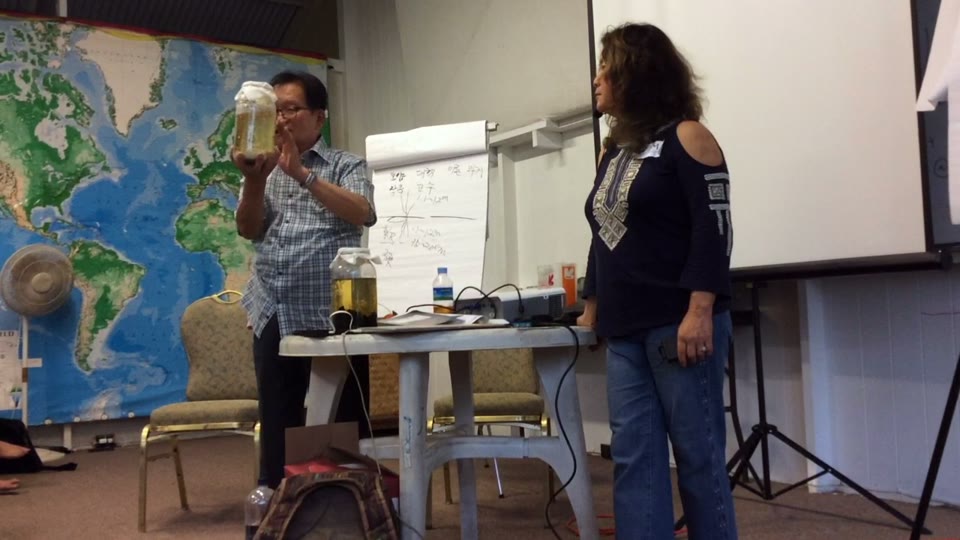
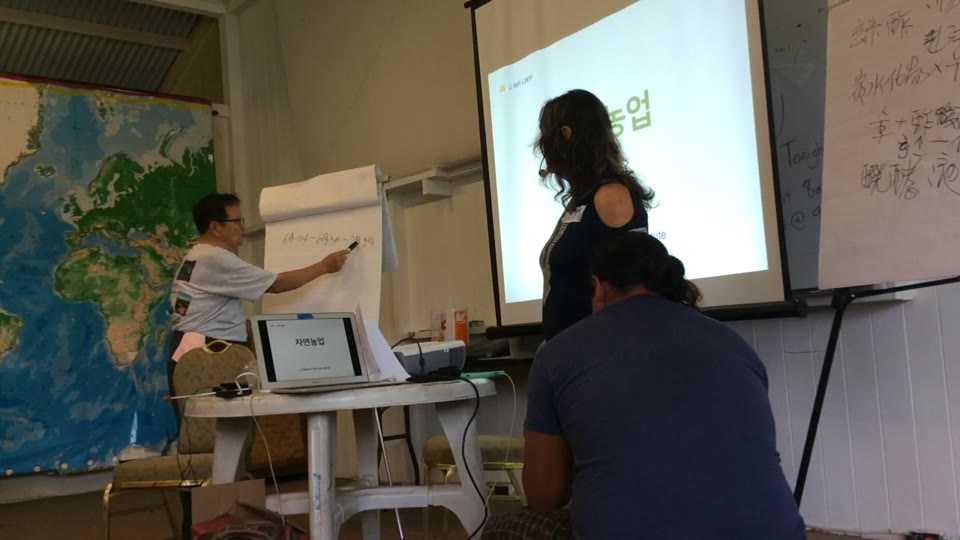
Cho cuts open a dry tangerine from breakfast and explains why it failed: fruit that bears once a year is conceived the summer before, between June 30 and July 5, so water-soluble calcium phosphate (Structure) goes on June 24 with Medicine (OHN). He writes the dates on the flip chart, then turns to the breakfast papaya, nitrogen and taste, and a long parable of mother's milk against cow's milk.

Taught Plump fruit is conceived June 30 to July 5; that is when you hit the 'home run'
structure medicine timing nutritive cycle fruit trees citrus

Master Cho Han-kyu, interpreted by Kim Chang ·2:21:07 ·23 min Korean, translated

Same Rice Seed, 180–240 Grains vs 80–140: Crop Results

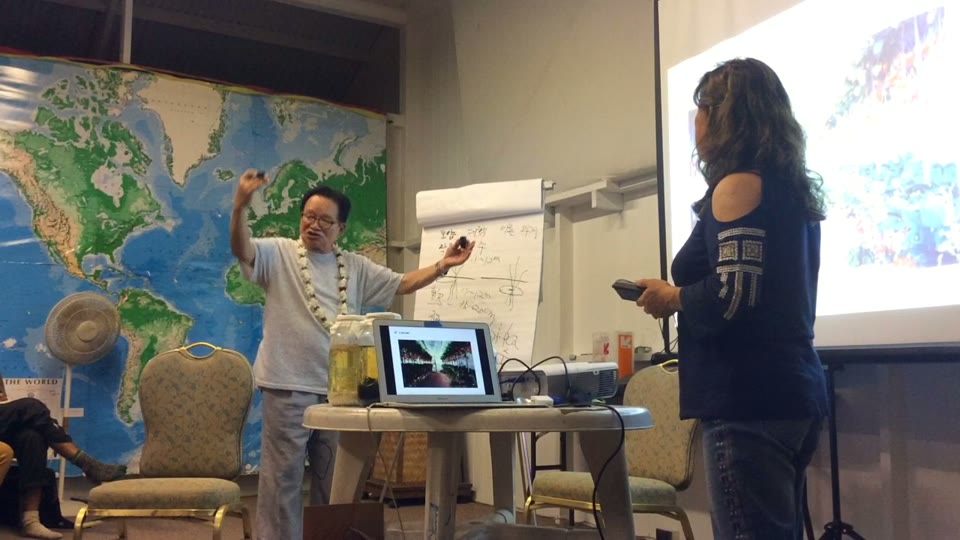
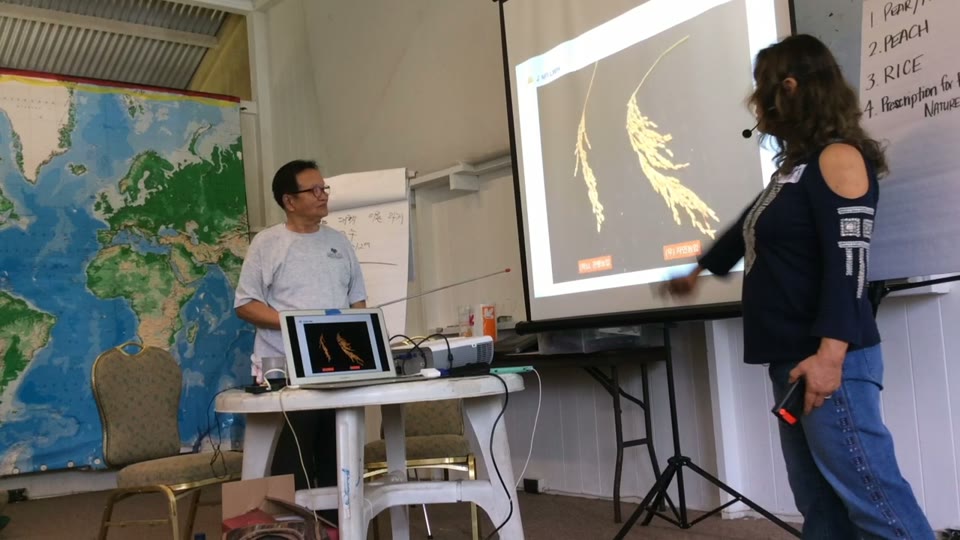
Cho's results slides: conventional rice at harvest looks like orphanage children, natural-farming rice like children raised by both parents; the same seed gives 180–240 grains a panicle against 80–140, about 30% more yield at a 50% better price. Then the stories behind the photos (cooked rice, Amore cosmetics, a melon farmer caught using agrochemicals, Ehime lemon leaves at $1 each) and crops fed at each 'morning sickness': pepper, beans, broccoli, cauliflower, corn and strawberries. Lunch follows.

Taught Same seed: natural farming 180–240 grains a panicle, conventional 80–140

rice yield structure timing broccoli corn

Master Cho Han-kyu, interpreted by Kim Chang ·0:00 ·29 min Korean, translated

Eggshell, Bone + Vinegar = Hens Laying, Sows in Heat

Drake interviews two Kohala farmers, then the camera catches the outdoor egg yolk oil demo. Back in the hall, Cho talks about egg yolk oil, then turns to Reproduction (WCA) from eggshells and Structure (WCP) from burned cow bone: why each dissolves in vinegar, and how he uses them for flower buds, hens that stop laying and sows that won't come into heat.

Taught Start egg yolk oil with one dozen eggs; a batch takes about an hour

reproduction structure medicine cleanser livestock poultry

Master Cho Han-kyu, interpreted by Kim Chang ·0:00 ·37 min Korean, translated

Fat Tree, Empty Fruit: The IMO5 Ring at the Drip Line

Cho opens with plans: next time he wants to walk farms and diagnose crops, and he wants Hawaiʻi visitors to eat on natural farms. Then he cuts open the mangosteen a participant gave him. It's nearly empty, because the tree was overfed when young and lacked calcium phosphate the July before. His fix is IMO4 mixed 1:1 with vinegar-moistened bone char, spread in a ring at the drip line ahead of flowering; the room's questions settle what the 1:1 means.

Taught IMO5 = IMO4 mixed 1:1 with bone char moistened with brown rice vinegar

microbes structure cleanser nutritive cycle fruit trees mangosteen

Master Cho Han-kyu, interpreted by Kim Chang ·0:00 ·22 min Korean, translated

Seawater + Calcium Weekly = Skin Bees Can't Break

Cho opens with the rice chart on the screen and says upland rice would grow here on mountain moisture. Then he holds up a damaged citrus fruit: it didn't crack, a bee stung it, because too much nitrogen made the skin thin. The fix is a weekly fine-mist spray of Structure (WCP), Reproduction (WCA) and seawater, given before the plant's mid-week dip, which he writes on the flip chart for a quarter acre.

Taught Mountain humidity here is about 70%, enough to grow upland rice; IMO No. 4 holds 80% moisture

structure reproduction seawater citrus fruit skin foliar spray

Master Cho Han-kyu, interpreted by Kim Chang ·1:54:45 ·34 min Korean, translated

Feed 5–7 Days Early: Ripening, Flower Buds, Leaf Shape

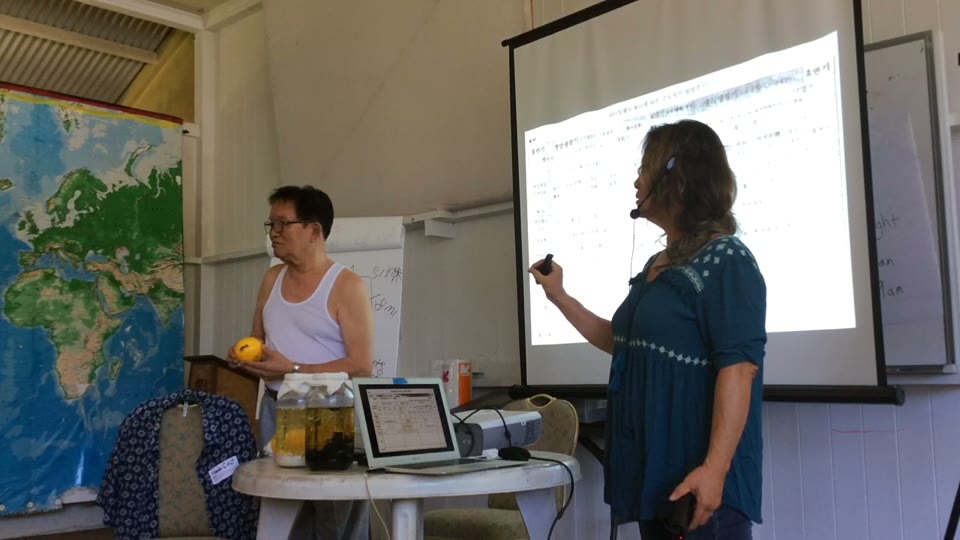
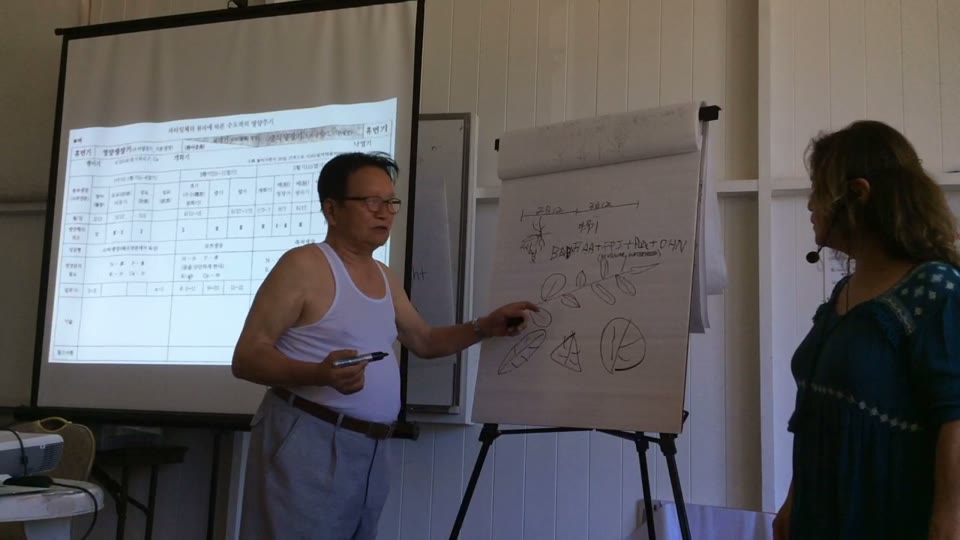
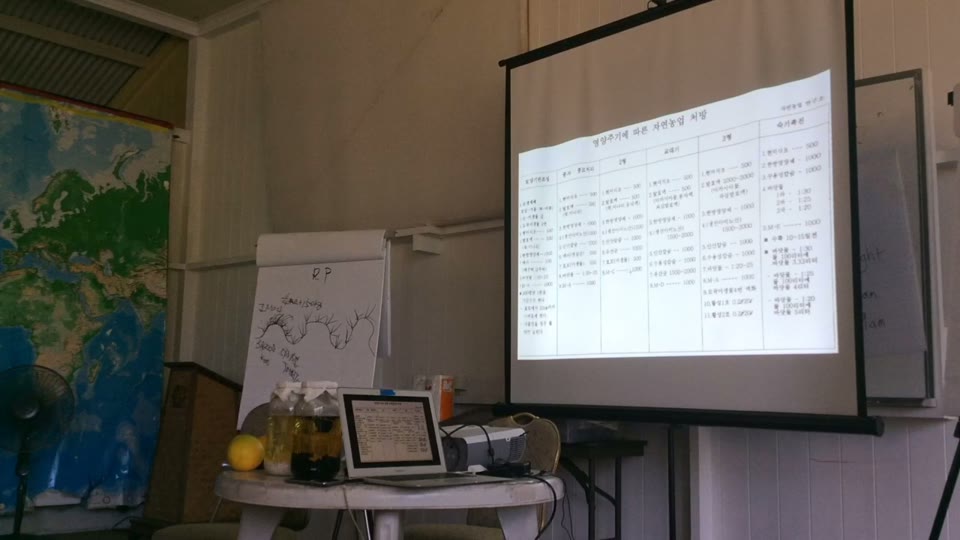
With the prescription handout projected, Cho goes through the stage columns and the ripening spray: seawater 1:30, then 1:25, then 1:20 a week apart, sugar up 2–3%, plus purslane Food at 1:1000 for shine. Then the rule: give each stage's prescription 5 days, or a week, before the stage. Questions follow: flowers are made the summer before, the moon calendar, rice by leaf count, reading the stage from leaf shape, and alternate bearing. It ends at lunch.

Taught The prescriptions go by stage: seed and seedling, Type 2 for the trunk, changeover, Type 3 for the fruit, then ripening

timing ripening brix seawater structure food

Master Cho Han-kyu, interpreted by Kim Chang ·29:35 ·24 min Korean, translated

The Season on One Table: Soil, Soak, Flowers, Sugar

Told he has two minutes, Cho asks what matters most in farming (the soil), then runs through the whole season on the projected table: cover crops, the seedling soak with the leaves kept dry, Type 2, the changeover and next year's fruit, Mineral D as water drawn from rock, Type 3 and ripening. He closes with his hopes for Hawaiʻi: classes on the islands, a CGNF Hawaiʻi quality mark, and starting small.

Taught After transplanting: Type 2, Fuel (FAA) for nitrogen

nutritive cycle soil seeds structure reproduction minerals