Makapala, North Kohala, Hawaiʻi Island · October 19–21, 2017

Master Cho on the Nutritive Cycle

Three days in a Makapala hall with Master Cho Han-kyu: when to feed a crop, what to feed it, and why. All seven recorded sessions are here as they happened. His Korean is translated again and checked, so you can read what he said, not only what the room heard.

Read the whole seminar in one page →

Topics microbes nutritive cycle livestock history timing soil food philosophy structure medicine rice cleanser fruit trees protectors reproduction corn Clear

7 parts on “food”

Joe McGinn ·0:00 ·28 min

Brown Sugar + Rice = the Whole Toolbox

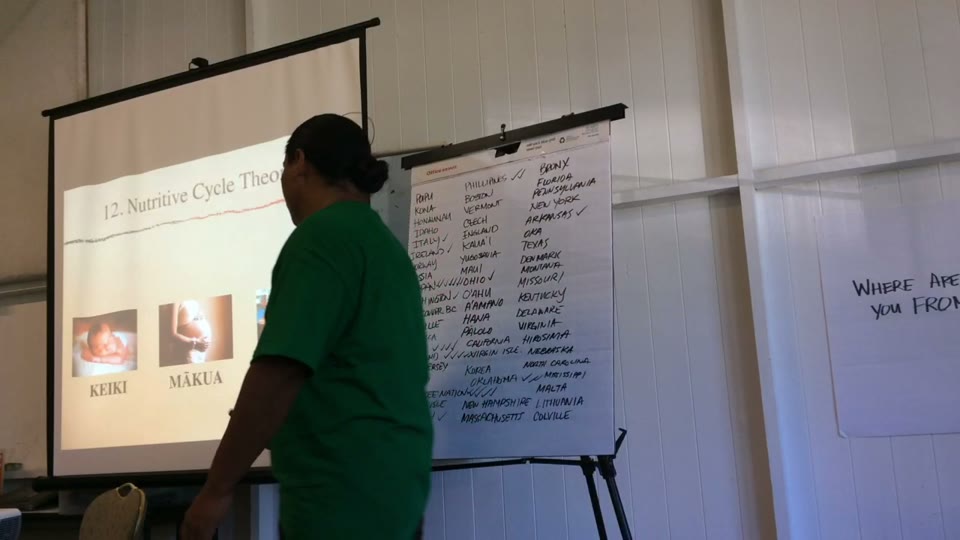
Joe McGinn opens the afternoon by asking everyone where their grandparents are from, then walks through Cho's principles of natural farming in slides, read through a Hawaiian lens. He ends on a simple point: every solution rests on brown sugar or on rice vinegar, so anyone can start, beginning with Food (FPJ).

Taught Supermarkets and tractors came in around the 1930s, so grandparents born before then farmed without machines or chemical fertilizer

history nutritive cycle microbes food cleanser hawaii

Drake Weinert ·1:00:49 ·37 min

Well-Fed Diversity = Healthy Soil: KNF in Scientists' Words

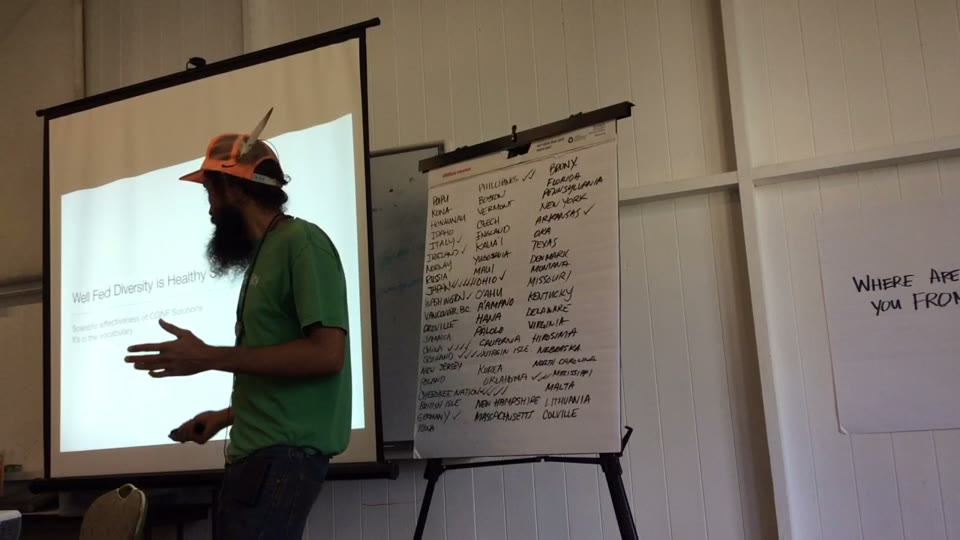
Drake Weinert brings back what soil scientists said at the Hawaii Farmers Union state convention and maps it onto Cho's solutions: Microbes (IMO) as biodiversity, Food (FPJ) as concentrated root exudates, fungi that build soil aggregates. Then questions: why FPJ is like an exudate, fixing deficiencies, the fungus-to-bacteria ratio, sprayers, and spraying a mixed garden where crops sit at different stages.

Taught Microbes (IMO) = biodiversity; tell a scientist that and you're speaking their language

soil microbes food fungi nutritive cycle science

Master Cho Han-kyu, interpreted by Kim Chang ·2:27:23 ·31 min Korean, translated

Living Liquid, Not Enzyme: Collect at Dawn, Face South

Cho says what we make isn't an enzyme but a living fermented liquid, and tells the loaves and fishes as a picture of how one lump of Microbes covers 6,000 pyeong. He weeps, then says farming is done with love, not technique. The practical core: collect material when the plant holds the most of nature's power, in the morning, and collect IMO where the first sun falls; sunlight's far-infrared growth ray is why sprouts face south. He ends on three sets of parents: the crops that raise you, so pesticide is parricide.

Taught One fist-sized lump of Microbes (IMO) can be multiplied for about 6,000 pyeong

microbes food timing collection sunlight philosophy

Master Cho Han-kyu, interpreted by Kim Chang ·39:34 ·17 min Korean, translated

Nature = 3 Chi + 3 Heats + 4 Bodies + 3 Kingdoms

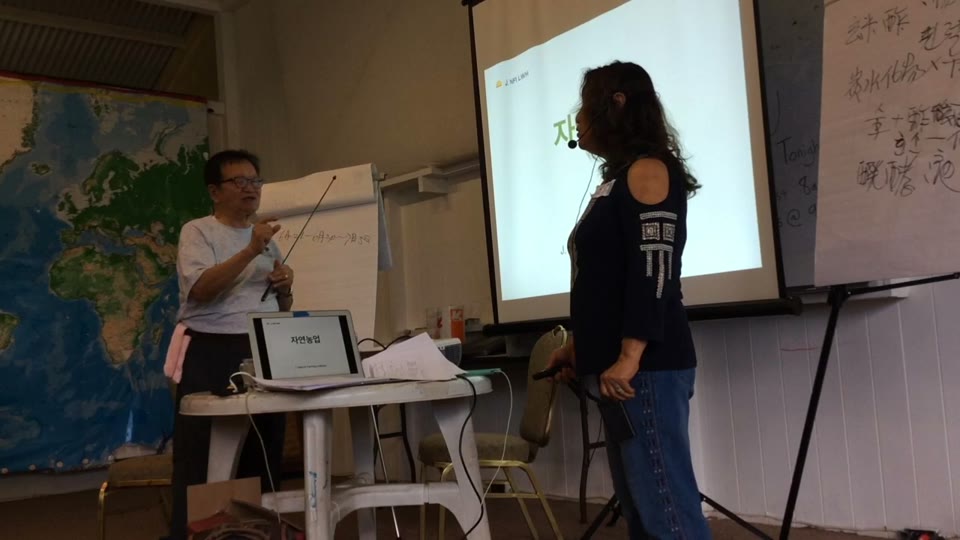
Cho puts up his 'Natural Farming' title slide and asks what nature is: three chi, three heats, the bodies and three kingdoms; farming is heaven, earth and people working with them, and food is the gift. Then he recites the Lord's Prayer, tells how pastors scolded him and threw him out, and says 1 Corinthians 3:16–17 is why he farms. A voice from the room sums it up in English.

Taught Cho came to natural farming through 1 Corinthians 3:16–17: the body is God's temple

philosophy nature three chi fermentation faith food

Master Cho Han-kyu, interpreted by Kim Chang ·21:53 ·21 min Korean, translated

Baby Food by Age: Mugwort FPJ First, Fruit FFJ Later

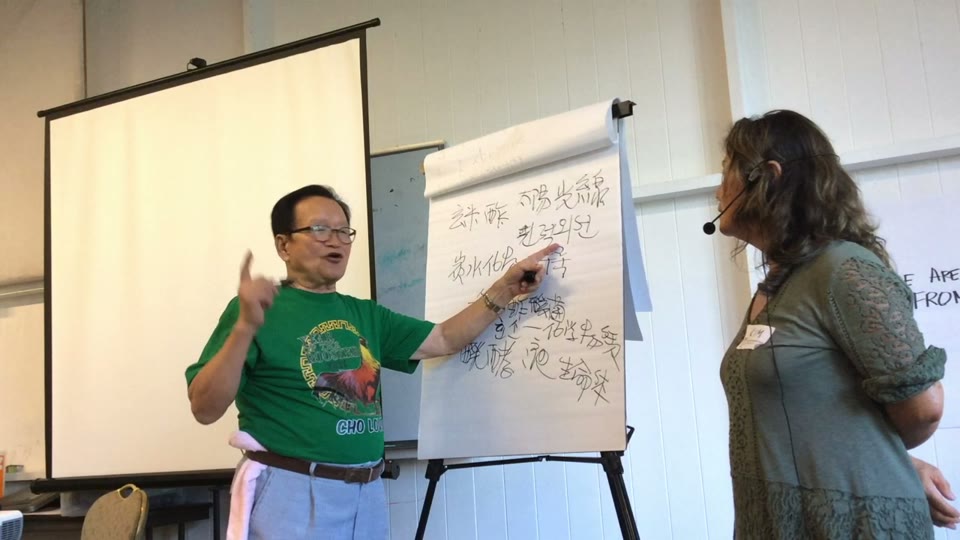
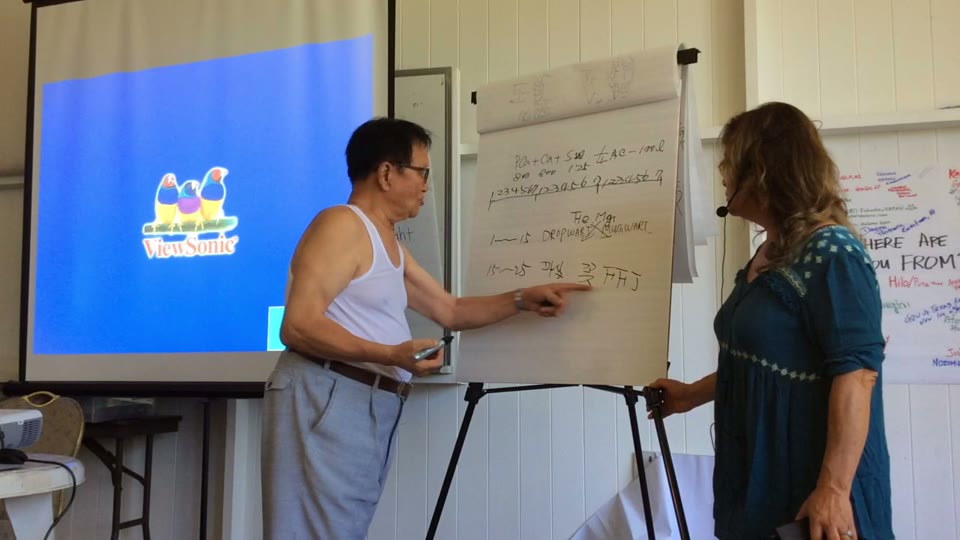
Cho uses a person's ages as the picture for a crop: from 1 to 15 the body is being built, so the young crop gets Food (FPJ) of mugwort and water dropwort for iron and manganese; from about 15 to 25 it gets Food (FFJ) of ripe fruit and opened flowers, once a week each. Dr. Park sorts out which plant carries which mineral. Then Cho tells farmers to run comparison plots, remembers the 78-year-old grandmother who taught him, and says the old farmers farmed with wisdom.

Taught Like a child of 1 to 15, a young crop gets Food (FPJ) of mugwort and water dropwort

food mugwort dropwort nutritive cycle timing comparison plots

Master Cho Han-kyu, interpreted by Kim Chang ·58:54 ·26 min Korean, translated

Seed Milk, Not Cow's Milk: The Seed Soak and Weaning Feed

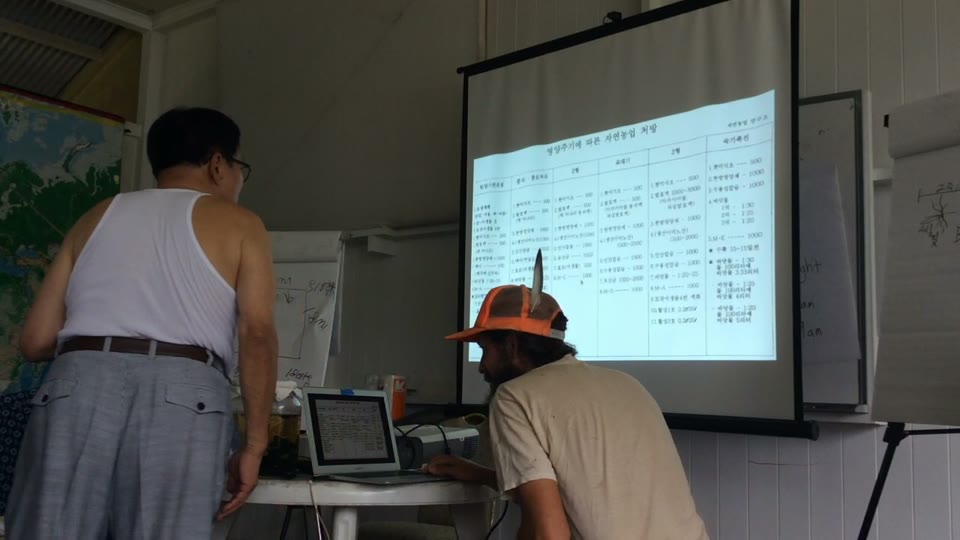
Cho walks the first stages of the rice chart: sprouting February 12, weaning March 12. A seed grows on its own seed milk, so base fertilizer is like raising a baby on cow's milk; raise seedlings in poor soil. When the milk runs out, start feeding, beginning with Fuel (FAA). Then he puts up the prescription handout and the seed soak and Type 2 columns are read out, with two errors in the English copy caught; Dr. Park ends on the Mineral products and clay jars.

Taught Rice: sown and sprouting February 12; young seedling and weaning March 12, a month later

seeds seed treatment fuel food cleanser medicine

Master Cho Han-kyu, interpreted by Kim Chang ·1:54:45 ·34 min Korean, translated

Feed 5–7 Days Early: Ripening, Flower Buds, Leaf Shape

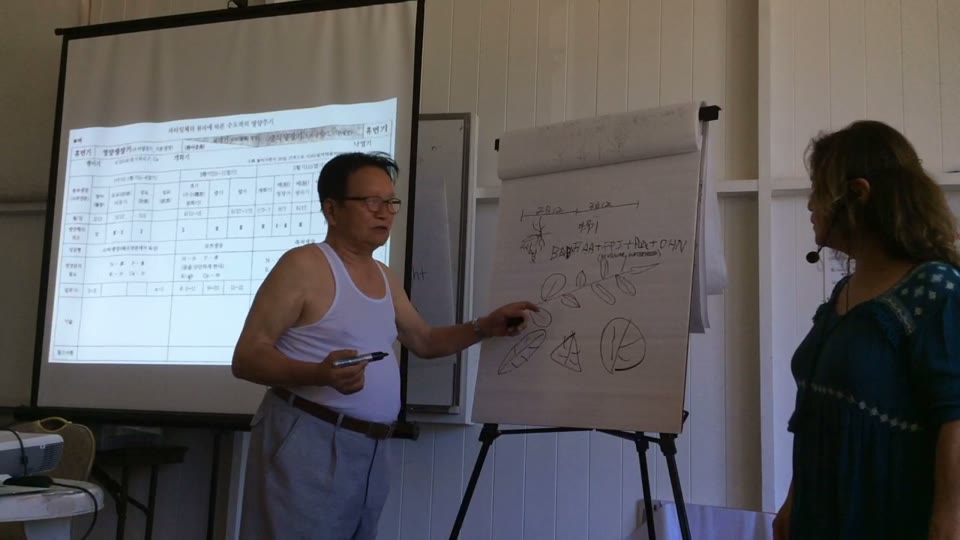
With the prescription handout projected, Cho goes through the stage columns and the ripening spray: seawater 1:30, then 1:25, then 1:20 a week apart, sugar up 2–3%, plus purslane Food at 1:1000 for shine. Then the rule: give each stage's prescription 5 days, or a week, before the stage. Questions follow: flowers are made the summer before, the moon calendar, rice by leaf count, reading the stage from leaf shape, and alternate bearing. It ends at lunch.

Taught The prescriptions go by stage: seed and seedling, Type 2 for the trunk, changeover, Type 3 for the fruit, then ripening

timing ripening brix seawater structure food