Makapala, North Kohala, Hawaiʻi Island · October 19–21, 2017

Master Cho on the Nutritive Cycle

Three days in a Makapala hall with Master Cho Han-kyu: when to feed a crop, what to feed it, and why. All seven recorded sessions are here as they happened. His Korean is translated again and checked, so you can read what he said, not only what the room heard.

Read the whole seminar in one page →

Topics microbes nutritive cycle livestock history timing soil food philosophy structure medicine rice cleanser fruit trees protectors reproduction corn Clear

4 parts on “corn”

Master Cho Han-kyu, interpreted by Kim Chang ·25:44 ·16 min Korean, translated

Crops Get Morning Sickness Too

From the Korean saying 'a good field bears healthy children', Cho moves to pregnancy and morning sickness as his picture of a body asking for what it needs. Then he turns it on the farm: pigs, cows, chickens, papaya, mango and tomato have their own morning sickness and cycles, and corn bears its ears for its own young, not for us.

Taught Korean saying: the field has to be good to bear healthy children.
nutritive cycle reproduction livestock corn philosophy

Master Cho Han-kyu, interpreted by Kim Chang ·3:27:08 ·27 min Korean, translated

Charcoal + Microbes, No Deep Hole: Lava to Soil in 6 Months

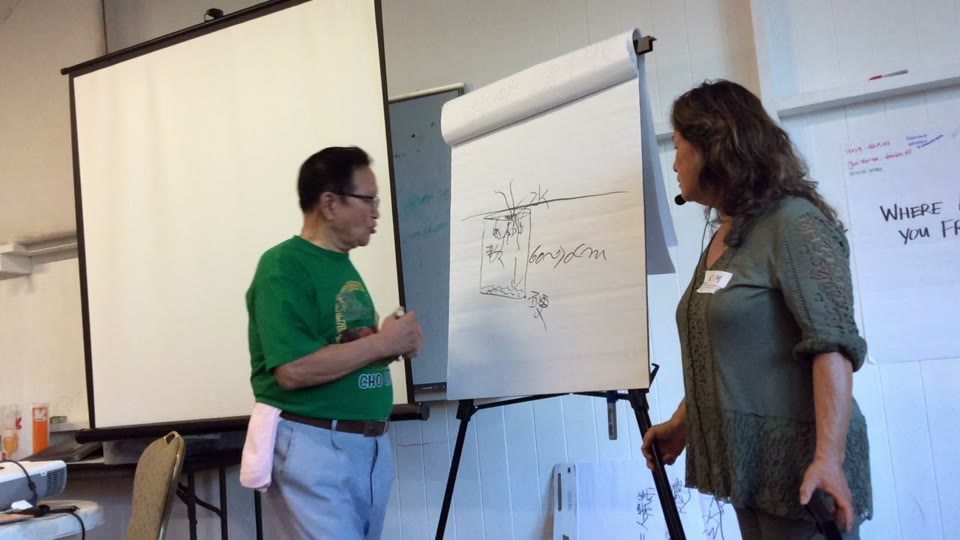
Cho draws the deep planting hole JICA used in Tanzania, 60 to 70 cm with fertilizer at the bottom, the way Hawaiʻi is told to plant fruit trees, and shows four ways it kills the tree. His way: no water, five lumps of charcoal on top and IMO4 over them. Then raising seedlings in poor soil before rich, and the Kona lava field he turned to 3 cm of soil in six months with charcoal, IMO4, corn and the Type 2 feed. The session ends with a cheer and dinner.

Taught JICA in Tanzania planted trees in holes 60 to 70 cm deep, fertilizer at the bottom, watered on top

microbes soil trees planting charcoal seedlings

Master Cho Han-kyu, interpreted by Kim Chang ·2:21:07 ·23 min Korean, translated

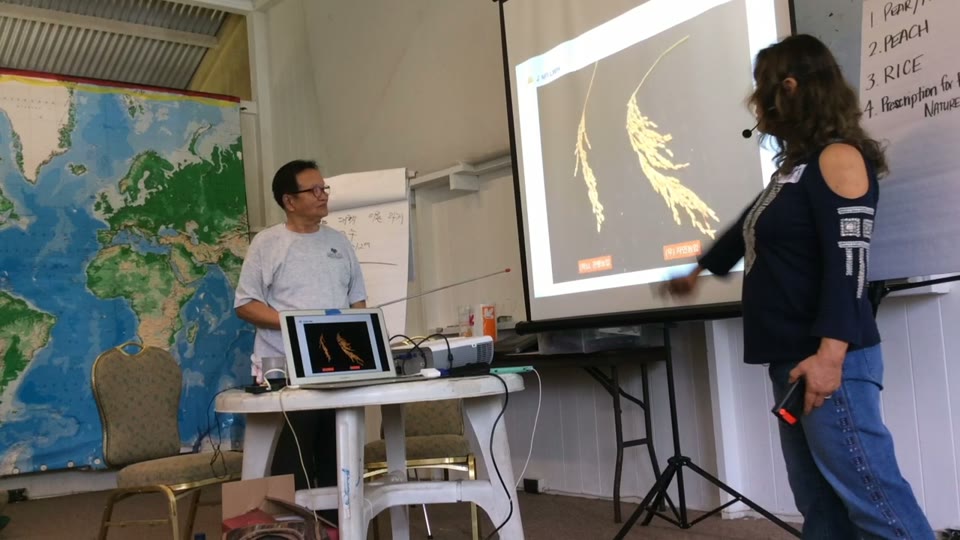
Same Rice Seed, 180–240 Grains vs 80–140: Crop Results

Cho's results slides: conventional rice at harvest looks like orphanage children, natural-farming rice like children raised by both parents; the same seed gives 180–240 grains a panicle against 80–140, about 30% more yield at a 50% better price. Then the stories behind the photos (cooked rice, Amore cosmetics, a melon farmer caught using agrochemicals, Ehime lemon leaves at $1 each) and crops fed at each 'morning sickness': pepper, beans, broccoli, cauliflower, corn and strawberries. Lunch follows.

Taught Same seed: natural farming 180–240 grains a panicle, conventional 80–140

rice yield structure timing broccoli corn

Master Cho Han-kyu, interpreted by Kim Chang ·1:37:15 ·35 min Korean, translated

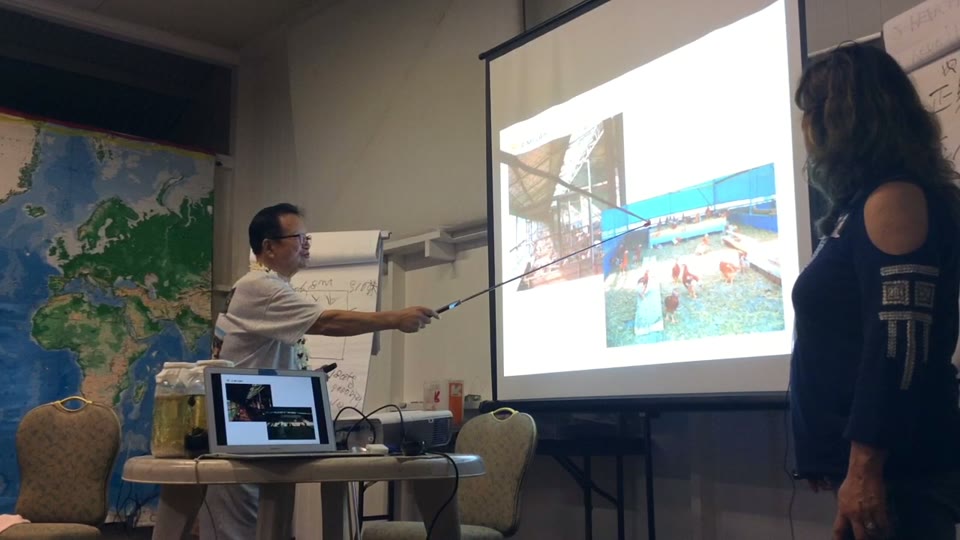
Chicks on Brown Rice, Hens on Green Corn, Sun on the Floor

The livestock section starts. Cho shows his self-ventilating pen and skylit chicken house, then raises chicks: brown rice first, the 3-day yolk, egg yolk with bamboo leaves, then greens like a cow. Green corn chopped and fermented with IMO4, LAB and grape yeast becomes feed; his feed-plot arithmetic gets checked by the room. He ends on the layer house: openings at 36 cm, sun across the floor once a day, and a rice-straw floor with no flies and no smell.

Taught A Hawaiʻi farmer with 15,000 chickens: IMO4 alone, no smell, no disease

livestock poultry microbes protectors feed corn