Makapala, North Kohala, Hawaiʻi Island · October 19–21, 2017

Master Cho on the Nutritive Cycle

Three days in a Makapala hall with Master Cho Han-kyu: when to feed a crop, what to feed it, and why. All seven recorded sessions are here as they happened. His Korean is translated again and checked, so you can read what he said, not only what the room heard.

Read the whole seminar in one page →

Topics microbes nutritive cycle livestock history timing soil food philosophy structure medicine rice cleanser fruit trees protectors reproduction corn Clear

5 parts on “fruit trees”

Master Cho Han-kyu, interpreted by Kim Chang ·0:00 ·40 min Korean, translated

Structure on June 24 Sets Next Year's Fruit

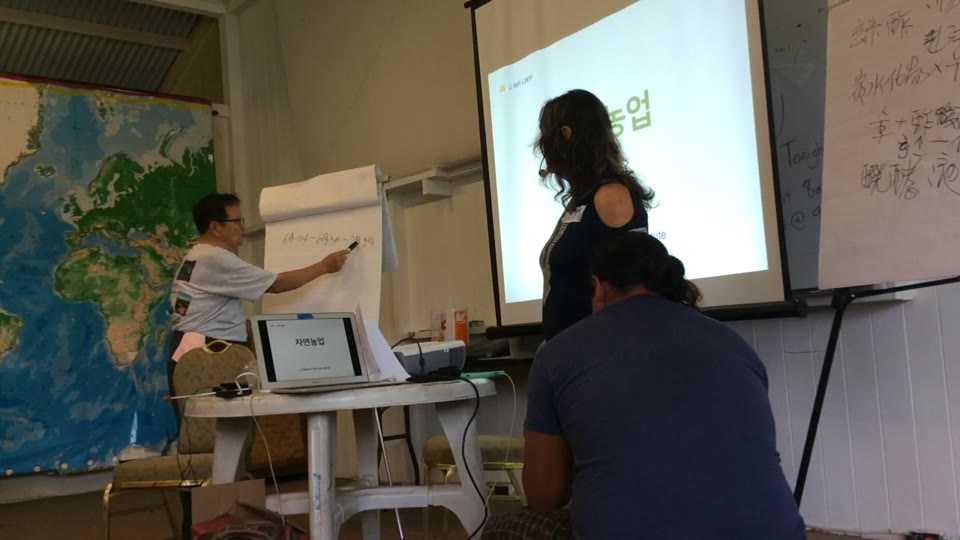
Cho cuts open a dry tangerine from breakfast and explains why it failed: fruit that bears once a year is conceived the summer before, between June 30 and July 5, so water-soluble calcium phosphate (Structure) goes on June 24 with Medicine (OHN). He writes the dates on the flip chart, then turns to the breakfast papaya, nitrogen and taste, and a long parable of mother's milk against cow's milk.

Taught Plump fruit is conceived June 30 to July 5; that is when you hit the 'home run'
structure medicine timing nutritive cycle fruit trees citrus

Master Cho Han-kyu, interpreted by Kim Chang ·0:00 ·37 min Korean, translated

Fat Tree, Empty Fruit: The IMO5 Ring at the Drip Line

Cho opens with plans: next time he wants to walk farms and diagnose crops, and he wants Hawaiʻi visitors to eat on natural farms. Then he cuts open the mangosteen a participant gave him. It's nearly empty, because the tree was overfed when young and lacked calcium phosphate the July before. His fix is IMO4 mixed 1:1 with vinegar-moistened bone char, spread in a ring at the drip line ahead of flowering; the room's questions settle what the 1:1 means.

Taught IMO5 = IMO4 mixed 1:1 with bone char moistened with brown rice vinegar

microbes structure cleanser nutritive cycle fruit trees mangosteen

Master Cho Han-kyu, interpreted by Kim Chang ·37:10 ·22 min Korean, translated

See Half, Farm Half: The Eightfold Path on the Board

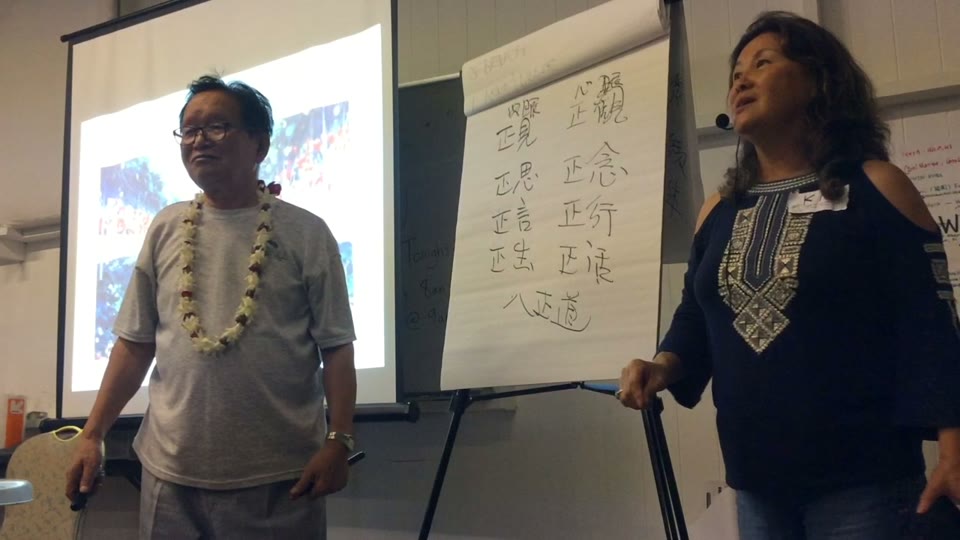
Cho writes the Eightfold Path on the flip chart: see rightly, think rightly, speak rightly, live rightly, first alone and then with others. The eye sees only half, and farming by the outward shape is what made the mangosteen rotten inside. Then religion, a plan to record his farm visits, his fee (a tenth of the extra profit) and one last IMO5 question.

Taught IMO5 goes at the drip line

philosophy nutritive cycle microbes fruit trees mangosteen observation

Master Cho Han-kyu, interpreted by Kim Chang ·59:30 ·38 min Korean, translated

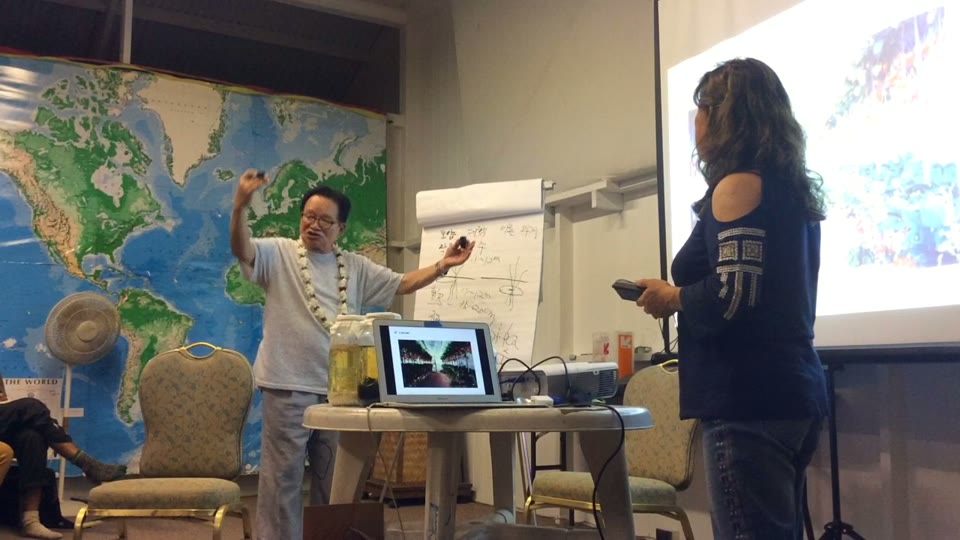
What a Crop Can Do: 8,000 Tomatoes, 14-Brix Papaya

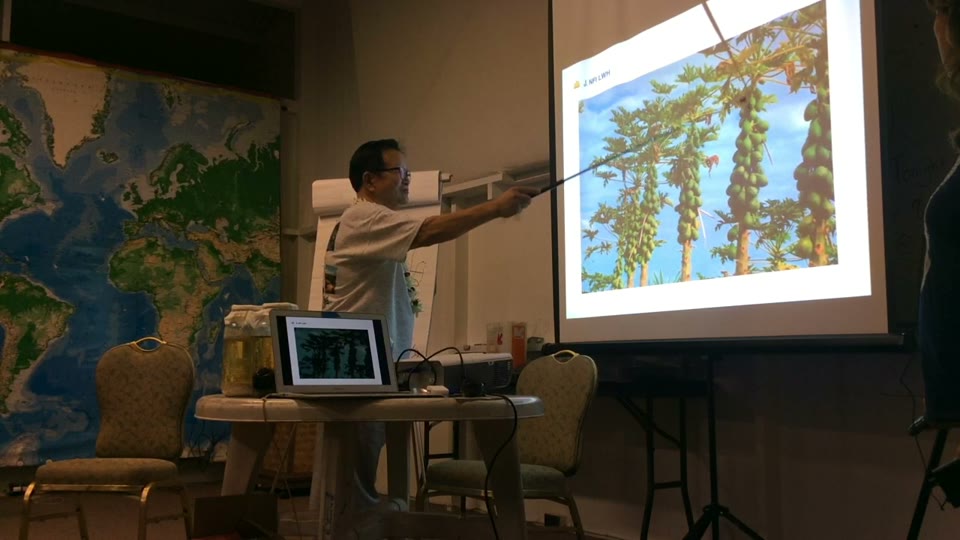
Cho points at the bubbling jars (alive, so never seal them in plastic), then takes an aside on crocks and a water machine from Korea. Then his slides of what crops can do: a 15-year grape vine, his 8,000-tomato plant, a Hilo papaya fruiting down the trunk on IMO4 alone, papaya brix, a Thai longan grove saved with a beer-and-vodka stopgap, chili, banana and taro on IMO4. He ends with a Korean field trial where Natural Farming got the worst field and the biggest harvest.

Taught One 15-year grape vine bore 3,600 bunches; the record vine bore 15,000

microbes minerals medicine fruit trees papaya brix

Master Cho Han-kyu, interpreted by Kim Chang ·0:00 ·30 min Korean, translated

Corn + IMO4 = No Till, No Weeds; Then a Four-Season Farm

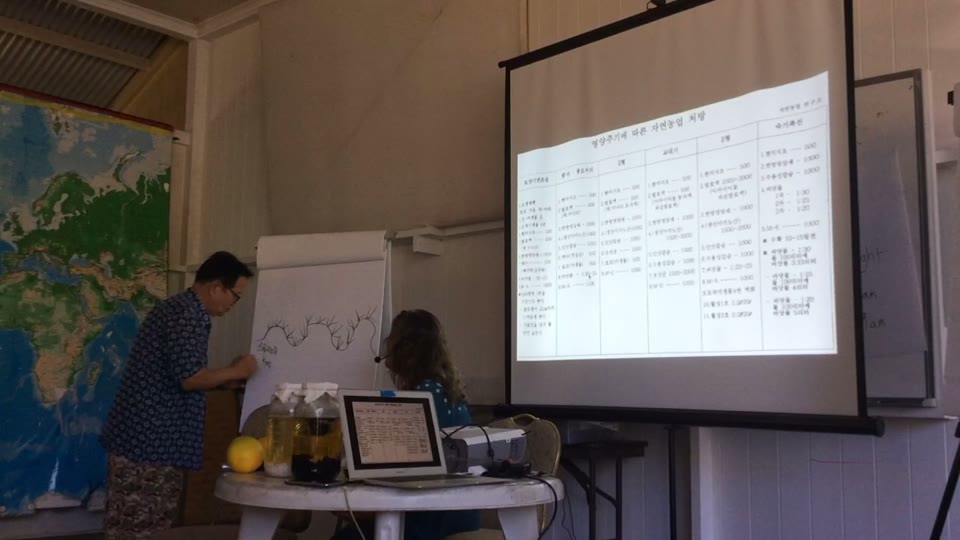
Back at the projected prescription table, Cho goes over the first two columns again: a corn cover crop with Microbes (IMO4) under it, laid down as no-till mulch, and the seedling soak. Then he leaves the table for his picture of a Natural Farming farm in Hawaiʻi that visitors come to: something blooming or fruiting in every season, a guesthouse, good food, and a place to learn.

Taught At about two months, cut the corn and lay it flat; the layer is about 7 cm

soil microbes seeds cover crop mulch fruit trees