Makapala, North Kohala, Hawaiʻi Island · October 19–21, 2017

Master Cho on the Nutritive Cycle

Three days in a Makapala hall with Master Cho Han-kyu: when to feed a crop, what to feed it, and why. All seven recorded sessions are here as they happened. His Korean is translated again and checked, so you can read what he said, not only what the room heard.

Read the whole seminar in one page →

Topics microbes nutritive cycle livestock history timing soil food philosophy structure medicine rice cleanser fruit trees protectors reproduction corn Clear

2 parts on “nitrogen”

Master Cho Han-kyu, interpreted by Kim Chang ·0:00 ·40 min Korean, translated

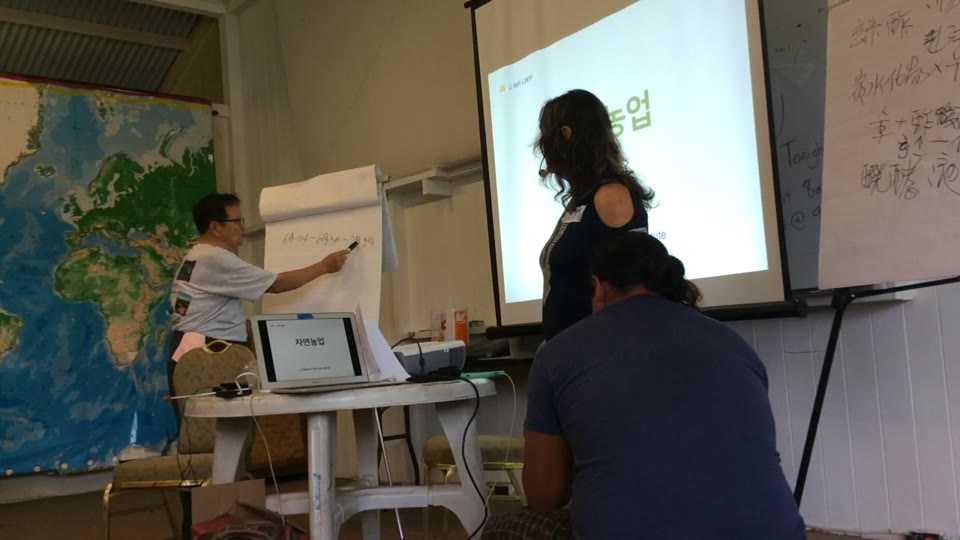
Structure on June 24 Sets Next Year's Fruit

Cho cuts open a dry tangerine from breakfast and explains why it failed: fruit that bears once a year is conceived the summer before, between June 30 and July 5, so water-soluble calcium phosphate (Structure) goes on June 24 with Medicine (OHN). He writes the dates on the flip chart, then turns to the breakfast papaya, nitrogen and taste, and a long parable of mother's milk against cow's milk.

Taught Plump fruit is conceived June 30 to July 5; that is when you hit the 'home run'
structure medicine timing nutritive cycle fruit trees citrus

Master Cho Han-kyu, interpreted by Kim Chang ·1:24:33 ·30 min Korean, translated

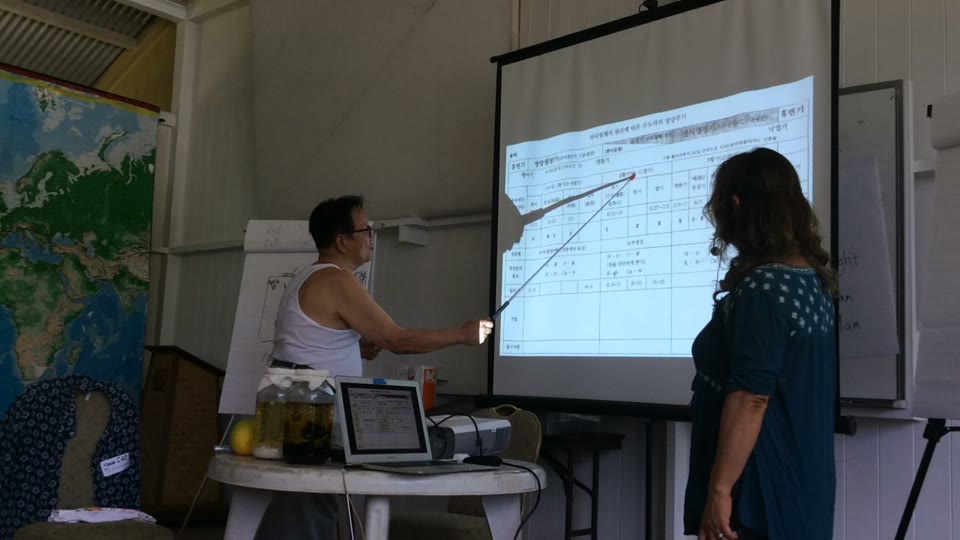
Send a Dowry at Transplant, Then Read the 180-Day Chart

Rice goes to the field on May 5. Cho's dowry story: like a father sending a daughter off with money, give extra at the end of Type 2 so the transplant roots in and fruits. He says Natural Farming is a work in progress that Hawaiʻi must build for its own weather, then walks the rice chart by date and leaf count, calls rice a 180-day crop, warns against overfeeding, and reads the nitrogen, phosphorus, potassium and calcium needs of each stage.

Taught Rice is transplanted at the strong-seedling stage, May 5, and gets Type 2 again in the main field

nutritive cycle rice transplanting timing nitrogen calcium