
Makapala, North Kohala, Hawaiʻi Island · October 19–21, 2017

Master Cho on the Nutritive Cycle

Three days in a Makapala hall with Master Cho Han-kyu: when to feed a crop, what to feed it, and why. All seven recorded sessions are here as they happened. His Korean is translated again and checked, so you can read what he said, not only what the room heard.

Read what it all adds up to →

Topics microbes nutritive cycle livestock history timing soil food philosophy structure medicine rice cleanser fruit trees protectors reproduction corn Clear

5 talks on “protectors”

Master Cho Han-kyu, interpreted by Kim Chang ·18 min Spoken in Korean

Microbes Digest, You Absorb: Keep Microbes and Feed Local

Seated now, Cho says a crop is a living being made of the same sun, air, water and soil as us, so farming starts with humility: 'natural farming is love'. He writes three chi and three heats on a fresh flip-chart page and says body heat is fermentation heat, because microbes digest our food and we absorb what they make. From there: collect microbes near you, and feed livestock what is made here, not shipped in.

Found A crop is a living being like you, made of the same sun, air, water and soil.
microbes protectors livestock feed fermentation philosophy

Joe McGinn ·33 min

Spray Once a Week, Price It High: Growing Farmers on Oʻahu

Joe McGinn's second deck: how he came to natural farming through Dr. Hoon Park and the 2011 Makapala course, what the Oʻahu network has learned (a food-safety test of the solutions, family classes, shared Medicine, chefs and home pig processing), and its challenges: doing it every week, getting to market, and making it pay. Questions on pigs, chickens and rabbits close it; his advice is to start with chickens.

Found Korea gets one chance a year: if the crop fails, winter comes and there's no food

livestock pigs protectors medicine reproduction taro

Master Cho Han-kyu, interpreted by Kim Chang ·35 min Spoken in Korean

Chicks on Brown Rice, Hens on Green Corn, Sun on the Floor

The livestock section starts. Cho shows his self-ventilating pen and skylit chicken house, then raises chicks: brown rice first, the 3-day yolk, egg yolk with bamboo leaves, then greens like a cow. Green corn chopped and fermented with IMO4, LAB and grape yeast becomes feed; his feed-plot arithmetic gets checked by the room. He ends on the layer house: openings at 36 cm, sun across the floor once a day, and a rice-straw floor with no flies and no smell.

Found Sun on a sheet-iron roof pulls fresh air through the pen

livestock poultry microbes protectors feed corn

Master Cho Han-kyu, interpreted by Kim Chang ·28 min Spoken in Korean

A Yolk You Can Lift: Hen Houses and Egg Tests

It's past 9 pm and Cho keeps going through his poultry slides: soil floors and dust baths, Korea's pesticide eggs, the hen that roosts highest, broody cages, dark laying boxes and rice hulls. He shows home-made feed, pig feed from broiler litter, and how to test an egg: lift the yolk, look for three layers, pull it with a toothpick. Then blood spots, red paper against pecking, dissected birds and darker yolks from purple sweet potato.

Found On a soil floor the droppings break down and the hens dust-bathe

livestock poultry eggs microbes protectors feed

Master Cho Han-kyu, interpreted by Kim Chang ·26 min Spoken in Korean

Seed Milk, Not Cow's Milk: The Seed Soak and Weaning Feed

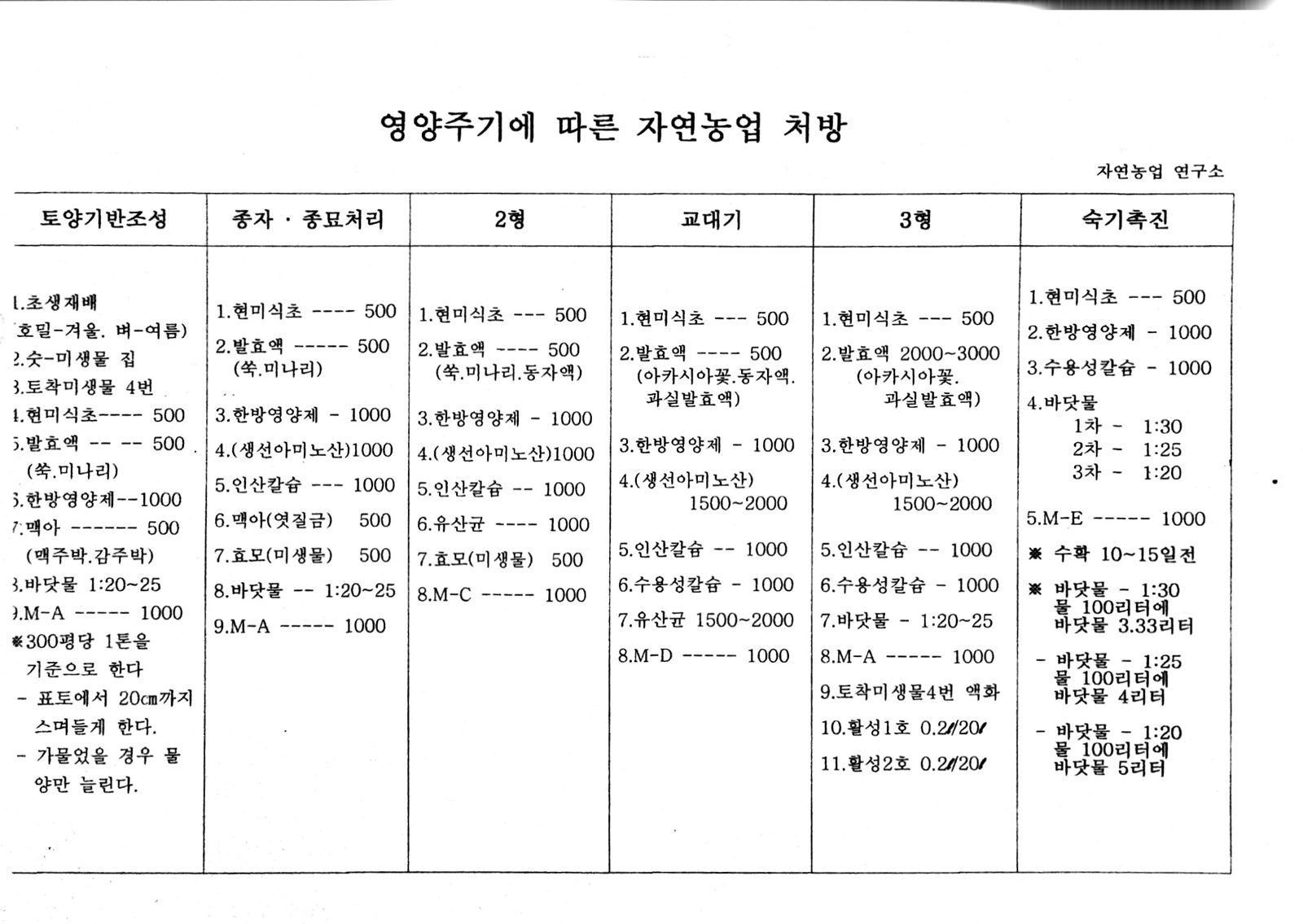
Cho walks the first stages of the rice chart: sprouting February 12, weaning March 12. A seed grows on its own seed milk, so base fertilizer is like raising a baby on cow's milk; raise seedlings in poor soil. When the milk runs out, start feeding, beginning with Fuel (FAA). Then he puts up the prescription handout and the seed soak and Type 2 columns are read out, with two errors in the English copy caught; Dr. Park ends on the Mineral products and clay jars.

Found In Hawaiʻi you can grow rice twice a year; this chart follows Korean weather

seeds seed treatment fuel food cleanser medicine