Makapala, North Kohala, Hawaiʻi Island · October 19–21, 2017

Master Cho on the Nutritive Cycle

Three days in a Makapala hall with Master Cho Han-kyu: when to feed a crop, what to feed it, and why. All seven recorded sessions are here as they happened. His Korean is translated again and checked, so you can read what he said, not only what the room heard.

Read what it all adds up to →

Topics microbes nutritive cycle livestock history timing soil food philosophy structure medicine rice cleanser fruit trees protectors reproduction corn Clear

6 talks on “rice”

Master Cho Han-kyu, interpreted by Kim Chang ·29 min Spoken in Korean

Elementary School to 3:6 Rice: How Cho Found Natural Farming

With twenty minutes to dinner, Cho tells how he came to natural farming: elementary school only, 4-H, top of a 90-to-1 exam for the Gyeonggi livestock school, a vet license he gave up to prevent disease rather than cure it, Japan, and high school at 26. He names his three Japanese teachers, says Ōinoue first created the nutritive cycle, and calls Jesus his greatest teacher: 1 Corinthians 3:6 became the growing method and the name of his rice. Then the kimchi maker and a roofless church in Tanzania.

Found Cho went only as far as elementary school, then worked in 4-H as a young man
history biography nutritive cycle teachers rice philosophy

Master Cho Han-kyu, interpreted by Kim Chang ·35 min Spoken in Korean

Till Shallow, Roots Go Deep: Corn Mulch, Cabbage, Rice

Cho shows how to grow grass to control grass: in Hawaiʻi, corn cut at a meter and laid down over IMO4, with cabbage and melons planted through it. Paired rice photos follow: 2–3 seeds a hill against 8–12, a murky paddy with loaches and no herbicide. He argues deep tilling makes shallow roots, sends out the four nutritive-cycle handouts after a qigong break, runs a pull test with the room, and ends on professors who teach the past.

Found Grow grass to control grass: lay a cut cover crop down as mulch

mulch no-till tillage rice cabbage microbes

Master Cho Han-kyu, interpreted by Kim Chang ·23 min Spoken in Korean

Same Rice Seed, 180–240 Grains vs 80–140: Crop Results

Cho's results slides: conventional rice at harvest looks like orphanage children, natural-farming rice like children raised by both parents; the same seed gives 180–240 grains a panicle against 80–140, about 30% more yield at a 50% better price. Then the stories behind the photos (cooked rice, Amore cosmetics, a melon farmer caught using agrochemicals, Ehime lemon leaves at $1 each) and crops fed at each 'morning sickness': pepper, beans, broccoli, cauliflower, corn and strawberries. Lunch follows.

Found At harvest, conventional rice has dead, dry leaves, like orphanage children; natural-farming rice is raised by both parents

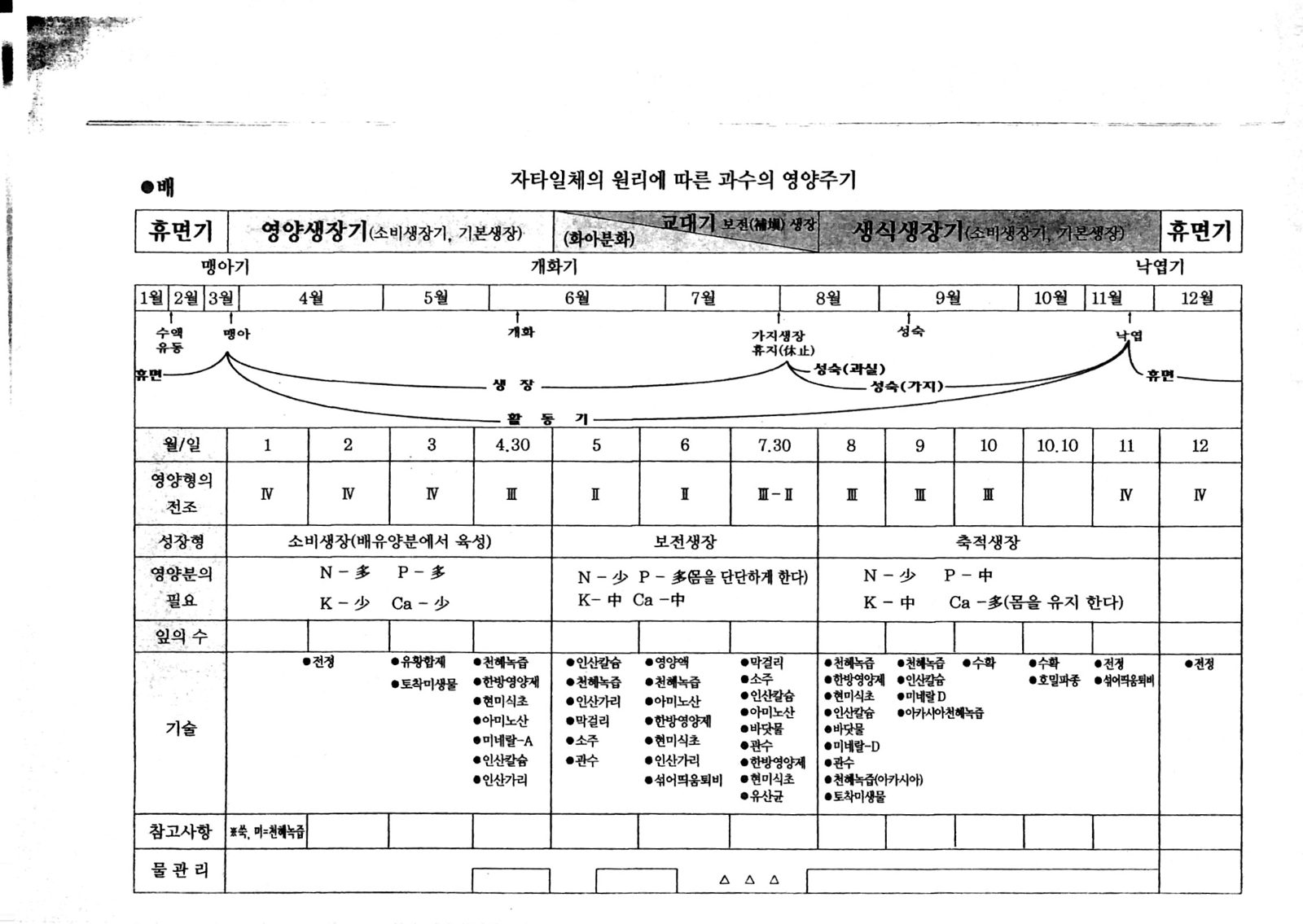
rice yield structure timing broccoli corn

Master Cho Han-kyu, interpreted by Kim Chang ·16 min Spoken in Korean

Ōinoue's Theory, Cho's Chart: Where the Cycle Came From

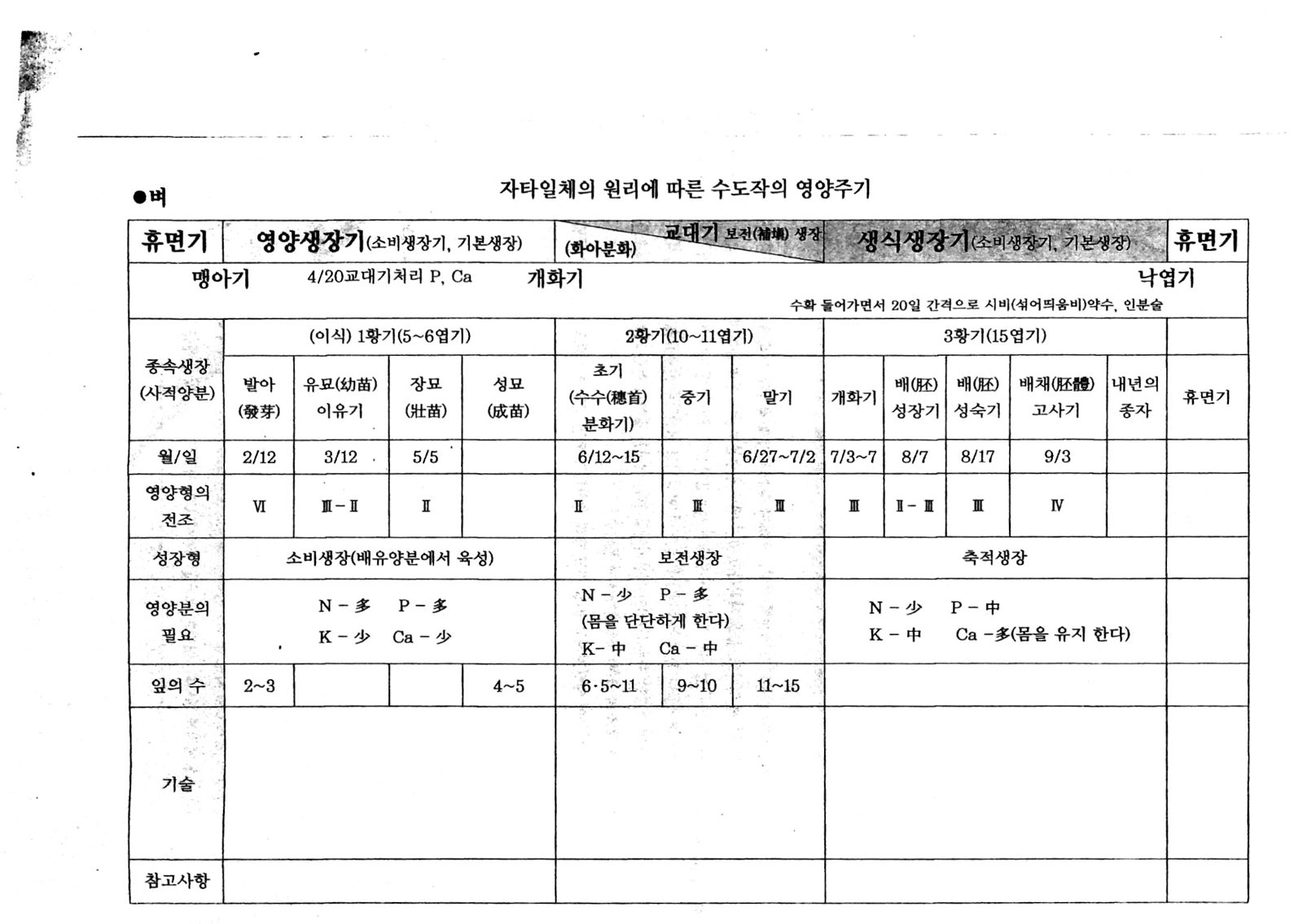
With the rice chart back on the screen, Cho says every crop has a life, and rice's starts with sprouting on February 12. After a stretch break he credits the nutritive cycle to Ōinoue Yasushi, who bred the Kyoho grape, tells his own story of Ōinoue's persecution and death, of learning from the widow and son, and of refusing to be the successor. The chart itself is Cho's, and he asks Hawaiʻi to fit its own crops into it, with Joe McGinn leading.

Found Every crop has a life of its own: papaya, mango, banana and coffee as much as rice

nutritive cycle history ōinoue rice hawaii kyoho grape

Master Cho Han-kyu, interpreted by Kim Chang ·26 min Spoken in Korean

Seed Milk, Not Cow's Milk: The Seed Soak and Weaning Feed

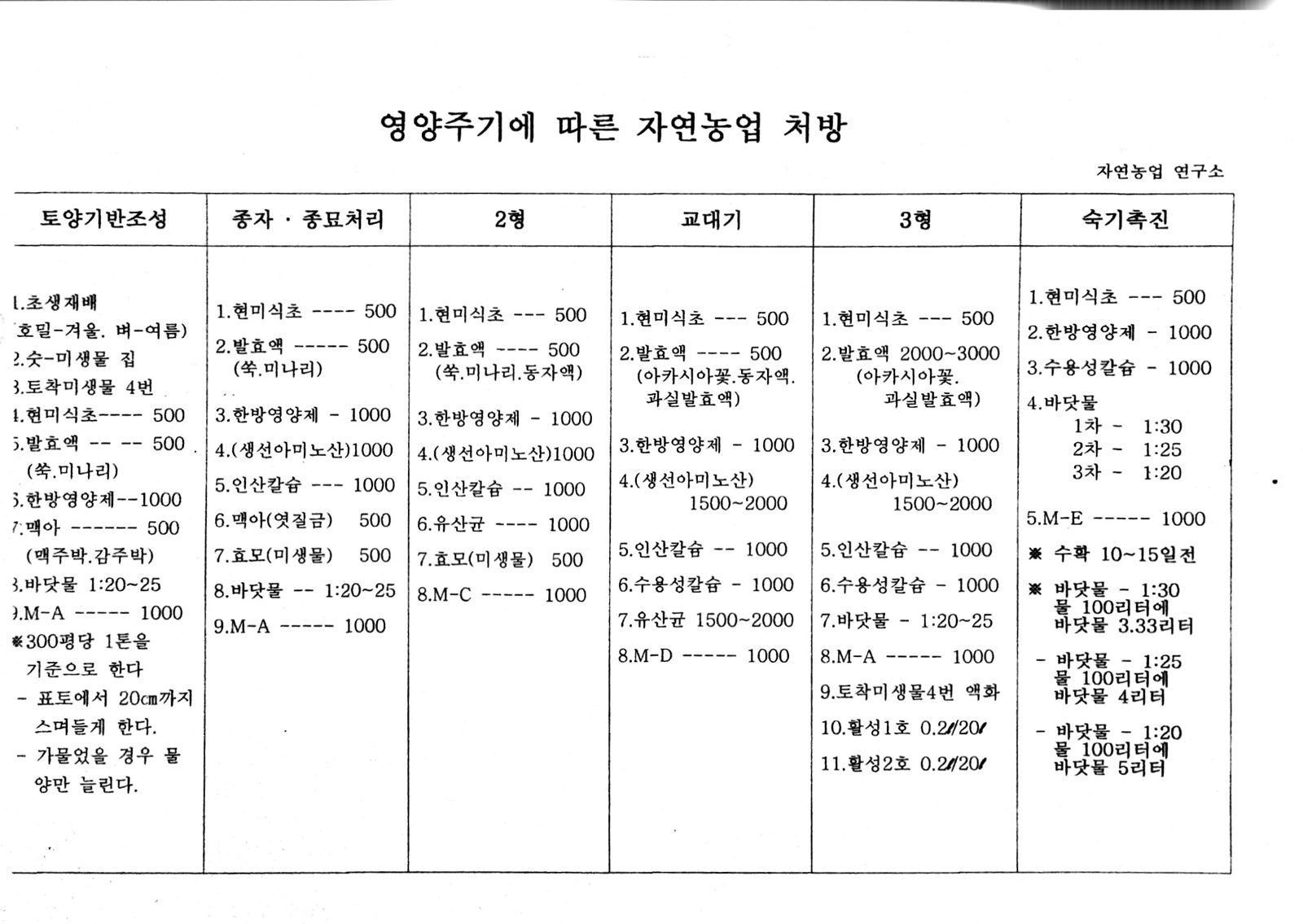
Cho walks the first stages of the rice chart: sprouting February 12, weaning March 12. A seed grows on its own seed milk, so base fertilizer is like raising a baby on cow's milk; raise seedlings in poor soil. When the milk runs out, start feeding, beginning with Fuel (FAA). Then he puts up the prescription handout and the seed soak and Type 2 columns are read out, with two errors in the English copy caught; Dr. Park ends on the Mineral products and clay jars.

Found In Hawaiʻi you can grow rice twice a year; this chart follows Korean weather

seeds seed treatment fuel food cleanser medicine

Master Cho Han-kyu, interpreted by Kim Chang ·30 min Spoken in Korean

Send a Dowry at Transplant, Then Read the 180-Day Chart

Rice goes to the field on May 5. Cho's dowry story: like a father sending a daughter off with money, give extra at the end of Type 2 so the transplant roots in and fruits. He says Natural Farming is a work in progress that Hawaiʻi must build for its own weather, then walks the rice chart by date and leaf count, calls rice a 180-day crop, warns against overfeeding, and reads the nitrogen, phosphorus, potassium and calcium needs of each stage.

Found Rice is transplanted at the strong-seedling stage, May 5, and gets Type 2 again in the main field

nutritive cycle rice transplanting timing nitrogen calcium