Till Shallow, Roots Go Deep: Corn Mulch, Cabbage, Rice
Master Cho Han-kyu, interpreted by Kim Chang, Founder of Korean Natural Farming (Janong)
Spoken in Korean. Translated to English and checked line by line.
Video of this visit will be added to the members' archive. The transcript times below match that recording.
Cho shows how to grow grass to control grass: in Hawaiʻi, corn cut at a meter and laid down over IMO4, with cabbage and melons planted through it. Paired rice photos follow: 2–3 seeds a hill against 8–12, a murky paddy with loaches and no herbicide. He argues deep tilling makes shallow roots, sends out the four nutritive-cycle handouts after a qigong break, runs a pull test with the room, and ends on professors who teach the past.
What they found
How do you stop weeds and get deep roots without plowing?
Cho's slides: a mulched field with squash, cabbage between laid-down corn, paired rice plantings (natural farming left, conventional right), loaches and small fish from the paddy. He draws a rice plant and its roots on the flip chart with '1.1~1.2m'. Cho steps out at about 7396 s and Tanya leads qigong until about 7593 s. Joe writes the four handout titles on the board: 1. Pear 2. Peach 3. Rice 4. Prescription for natural farming.
- Corn mulch for no-till beds (Hawaiʻi) — Cho: in Korea the cover is rye; Hawaiʻi is too hot, so grow corn, planted within 20 cm each way. Before laying it down, spread Microbes (IMO4) at 150 kg per 300 pyeong. Cut the corn at about 1 m and lay it down; it makes a layer about 10 cm thick, and 6–7 cm already stops grass. Part the corn and plant into it. For cabbage, the corn goes in about 2 months before. The interpreter added soil treatment solution with the IMO4.
- Microbes on new land — Interpreter, after checking with Cho off-mic: on land that has never had IMO, apply about three times, six months apart. Cho's own words are not audible.
-
Grow grass to control grass: lay a cut cover crop down as mulch
Korea uses rye; Hawaiʻi is too hot for rye, so use corn.
▶ 1:46:25 As spoken
-
Cut the corn at about 1 m and lay it down; 6–7 cm of cover stops grass
Corn planted within 20 cm each way gives a layer about 10 cm thick.
▶ 1:47:01 As spoken
-
Plant by parting the laid-down corn: no weeds, little or no fertilizer
Tomato and bell pepper do well; watermelon and melon come out clean; the cover holds moisture so crops stand drought.
▶ 1:48:12 As spoken
-
Cabbage: corn planted 2 months before, laid down, cabbage planted between
No weeds, and the cabbage does well.
▶ 1:50:46 From the slides
-
Spread IMO4 at 150 kg per 300 pyeong before laying the corn down
Then it ferments well and the corn itself becomes compost.
▶ 1:51:28 As spoken
-
A cabbage normally weighs 6–7 kg; a natural-farming one reached 20 kg
An audience member cited 64 lb cabbages in Fairbanks, Alaska; Cho: 'that's Alaska.'
▶ 1:53:07 As spoken
-
Cabbage goes through 'morning sickness' four times; pin the dates and feed then
The 'four times' was only in the interpreter's English; she named water-soluble calcium phosphate.
▶ 1:53:27 As spoken
-
Rice: conventional plants 8–12 seeds a hill, natural farming 2–3
12 seeds shoot straight up with thin stems and small ears; 2–3 spread like a fan with thick stems and big ears.
▶ 1:54:28 From the slides
-
IMO4 in the paddy turns the water murky, and the murk keeps barnyard grass down
Small animals and fish live there and cloud the water; the clear conventional paddy lets light in and grows weeds.
▶ 1:55:54 From the slides
-
No herbicide needed: loaches and fish appear and eat the weeds
Slides of loaches and small fish from the paddy.
▶ 1:57:31 From the slides
-
Natural-farming rice stands in order, so it gets even sun and air
Conventional rice looks like tangled hair.
▶ 1:57:55 From the slides
-
Till deep and roots go shallow; till shallow and roots go deep
▶ 1:59:50 As spoken
-
Roots go as deep as the plant stands tall; rice is 1.1–1.2 m, so its roots should reach 1.1–1.2 m
Flip chart: a rice plant and roots with '1.1~1.2m'.
-
Tillage reaches only 15–20 cm; untilled soil isn't hard anyway
Cho: rice roots must go 1.2 m; you can't till that deep, and the untilled soil is soft and tender.
▶ 2:02:21 As spoken
-
Old sugarcane land still holds microbes and beats soil that grew nothing
Answer to an audience member who said Hawaiʻi's ag land is all contaminated.
▶ 2:07:02 As spoken
-
On land that never had IMO: about three applications, six months apart
Interpreter's relay; wording ambiguous.
▶ 2:09:42 As spoken
-
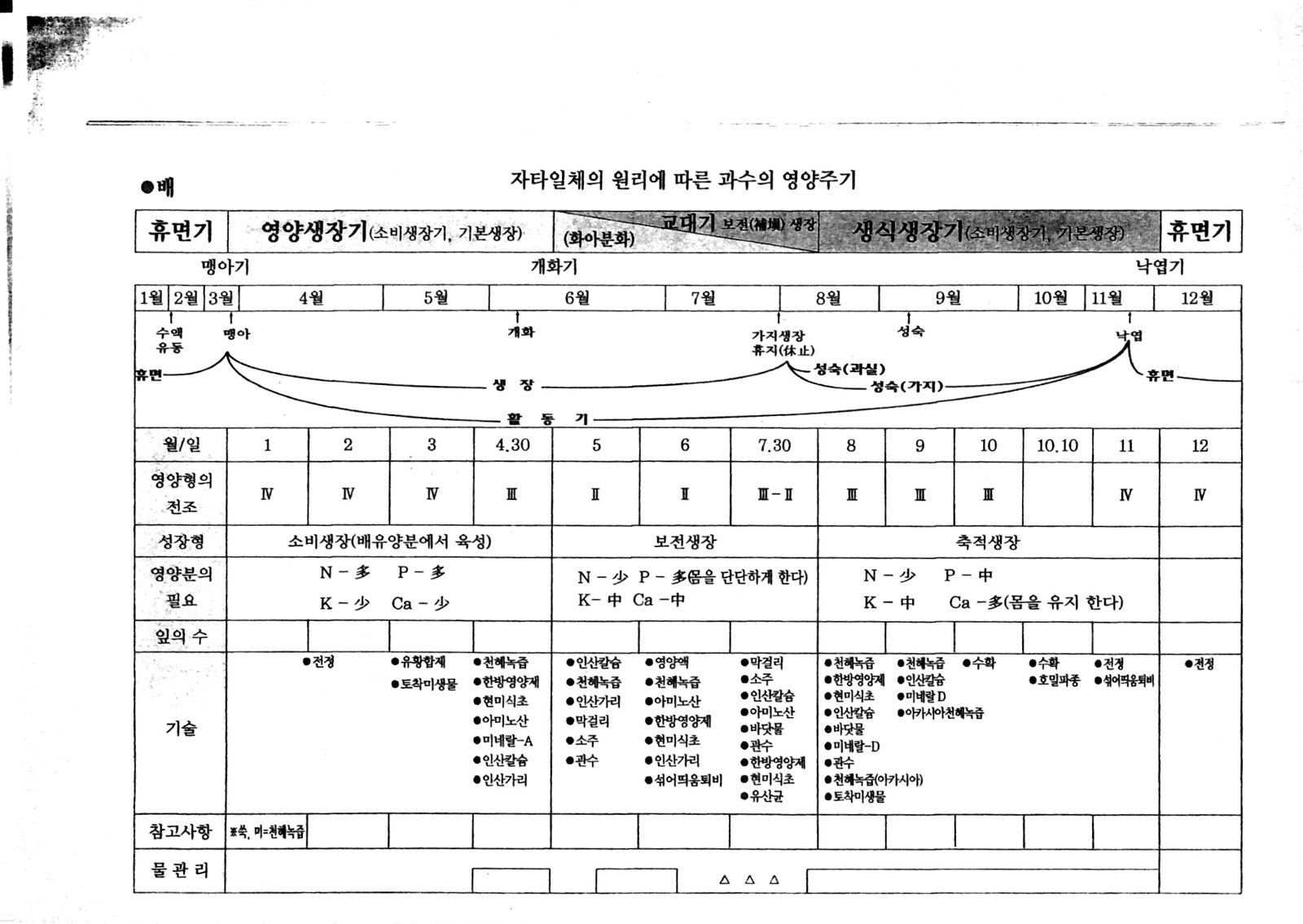
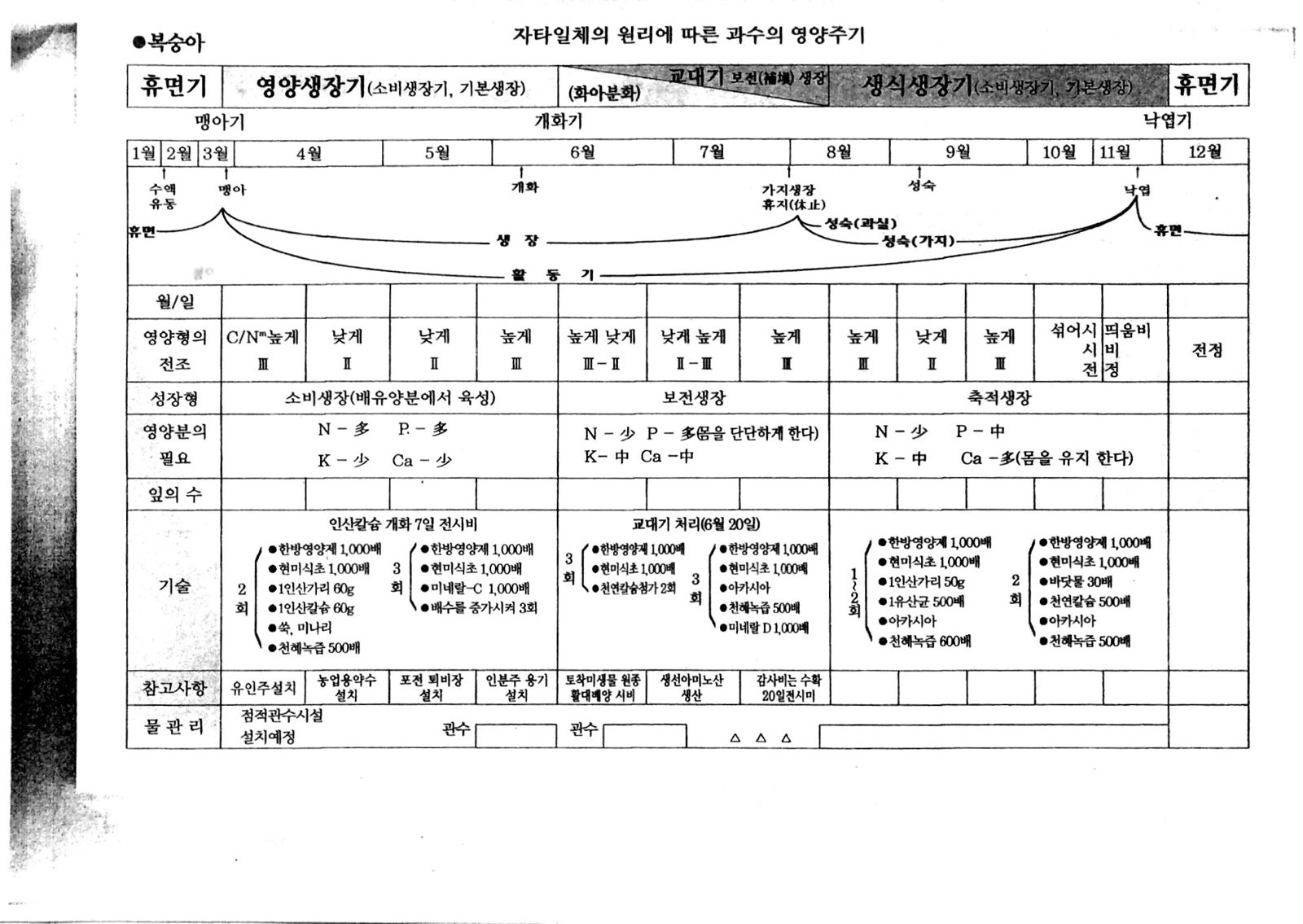
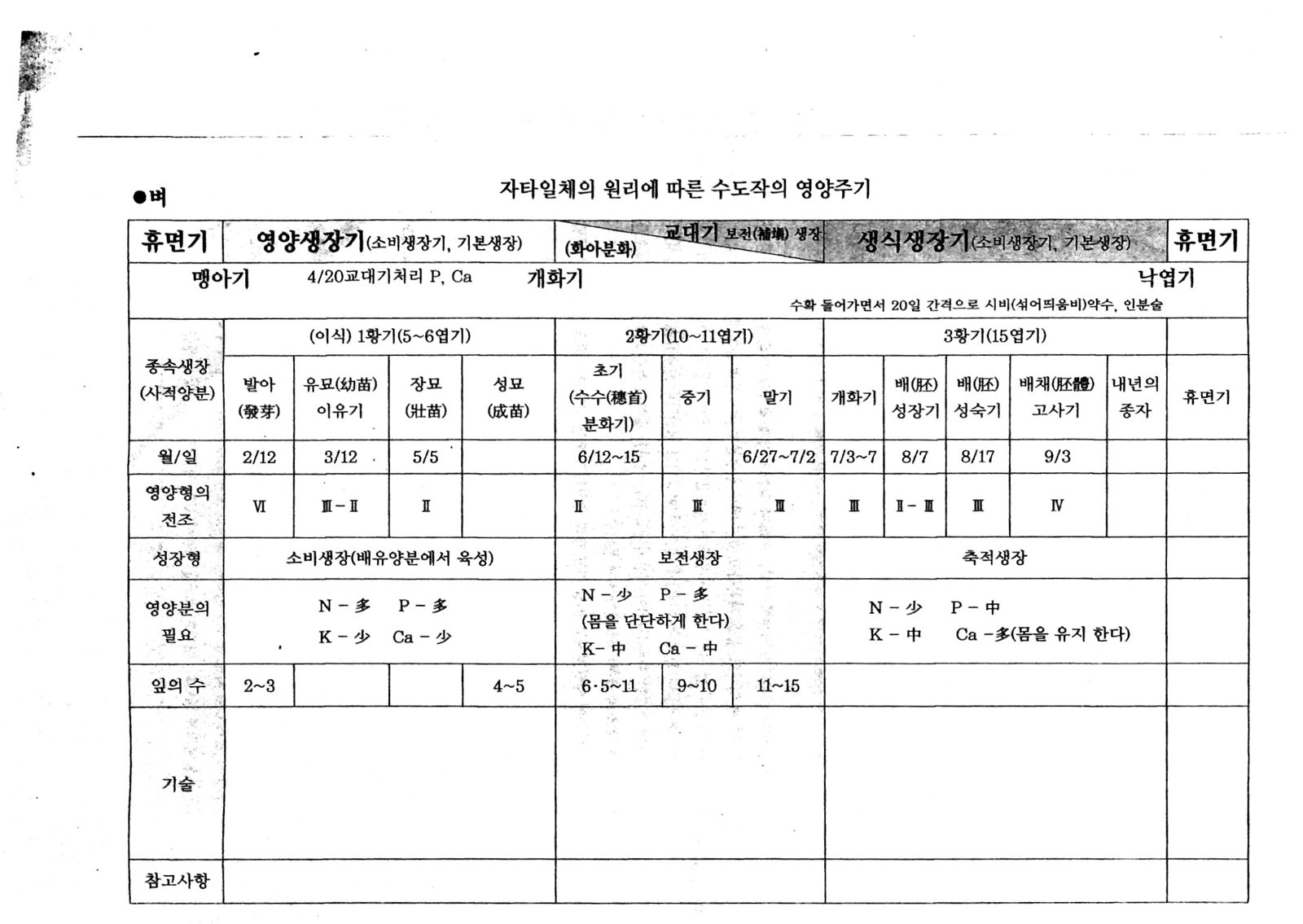
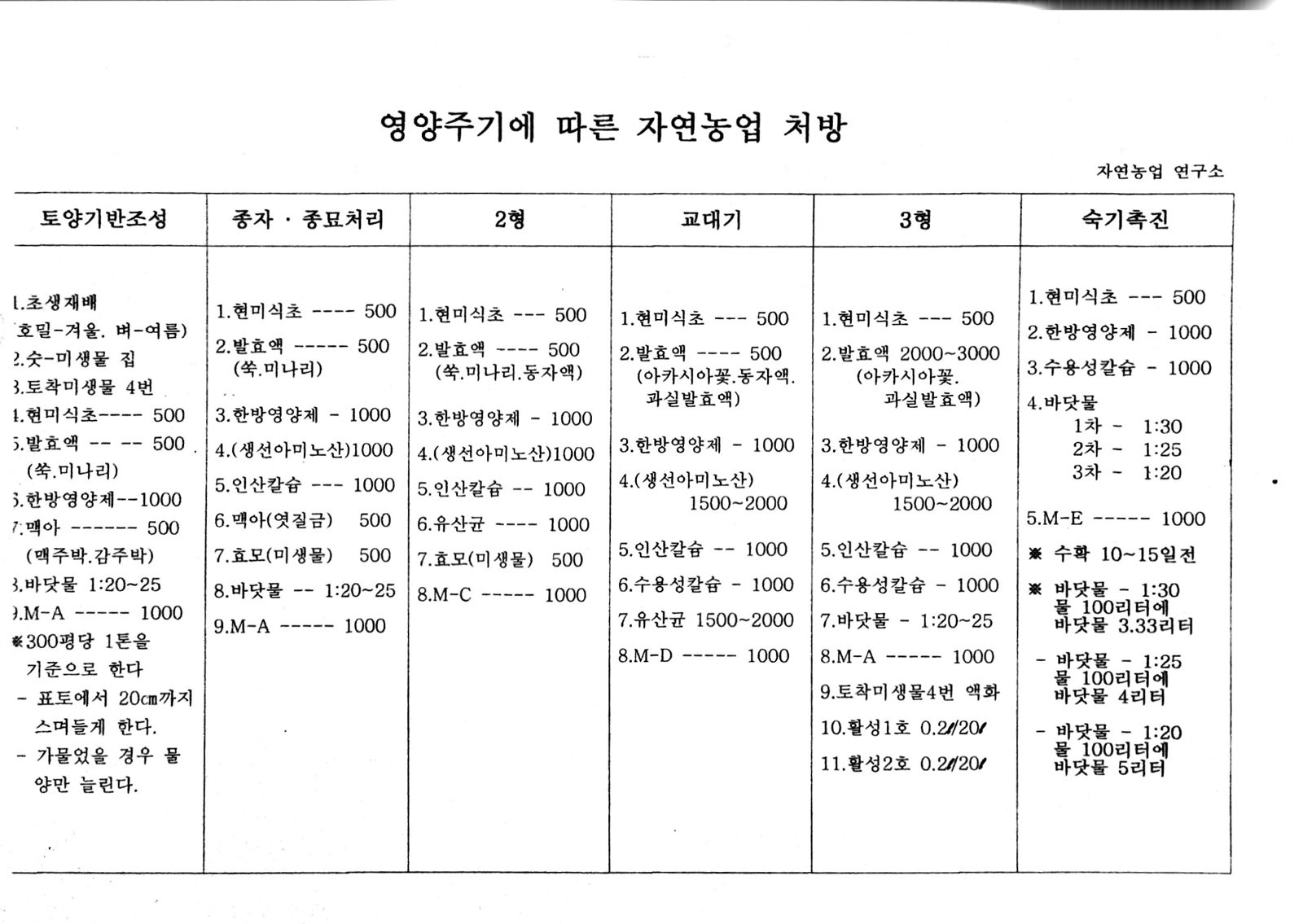
Four handouts: 1. Pear 2. Peach 3. Rice 4. Prescription for natural farming by the nutritive cycle
Drake hand-wrote English over the Korean sheets the night before with Google Translate, Kim Chang and Master Cho.
-
Pull test: a plant from tilled soil pulls out whole; one from untilled soil breaks off
The root that breaks off is the strong one. Cho: 'you've been taken in by scholar-swindlers.'
▶ 2:13:27 As spoken
-
Farmers take the soil as their university and the crop as their professor
Professors who farm after retiring do badly; crops grow toward the future, theory teaches the past, and every farm is different.
▶ 2:18:10 As spoken
- Cabbage weight and the rice comparisons are Cho's photos and figures; no yield data were given here, and the question on the yield difference was deferred.
- The cabbage's four 'morning sicknesses' were only in the interpreter's English.
- The answer on IMO for new land is ambiguous (three times six months apart, or three times within six months).
- The corn-mulch rates come from Cho's spoken Korean; the interpreter passed on only the 1 m height and 10 cm layer.
- Whose 20 kg cabbage it was is not clear.
- In hot places, a dense corn stand cut at about a meter and laid down can be the weed-stopping mulch.
- Spread Microbes (IMO4) under the corn before you lay it down so it turns to compost in place.
- Plant through the mulch; it holds moisture and keeps fruit clean.
- Sow fewer rice seeds per hill (2–3) so plants fan out with thick stems.
- Till as shallow as you can and let roots work their way down.
- Treat your soil as the school and your crop as the teacher.
Next to Master Cho's teaching
-
Agrees
A cover crop laid down as mulch so weeds can't grow His theory book covers the soil with leaves or straw so weeds cannot grow. Corn as the Hawaiʻi cover is new here.
Cho, Cho Han-Kyu's Natural Farming (Theory), p. 38
-
Agrees
Shallow tillage, deeper roots, and the pull test Nearly the same words, with the same pull test: crops in deep-plowed ground pull out; in unplowed ground the stems break.
Cho, Cho Han-Kyu's Natural Farming (Theory), p. 23
-
Agrees
Roots reach as deep as the plant is tall He told the 2017 fruit-tree class the same: the root should go as deep as the part above ground.
2017/Advanced Cho/advanced fruit/IMG_3194 @ 0:29:04 (translated)
-
Goes further
Microbes (IMO4) in the paddy in place of herbicide The 2005 newsletter's weed answer is IMO4 under laid rice straw. Here he adds the mechanism: murky water from small animals and loaches shades out barnyard grass.
CGNF Advanced (2005.08) (English translation), p. 53
“Grow grass to control grass.”
▶ 1:46:25
“If you were rice, where would you want to live? Here? Or here?”
▶ 1:59:03
“Till deep and the roots go down shallow. Till shallow? The roots go down deep.”
▶ 1:59:50
“So you've been taken in by scholar-swindlers.”
▶ 2:16:11
“Farmers took the soil as their university and the crop as their professor.”
▶ 2:18:10
In this talk
- 1:46:24Grow grass to control grass: corn mulch, no-till
- 1:50:41Cabbage between laid-down corn
- 1:52:27Cabbage: 6–7 kg conventional, 20 kg natural
- 1:54:18Rice: 2–3 seeds a hill, not 8–12
- 1:55:54Microbes in the paddy: murky water, loaches, no herbicide
- 1:58:46Deep tilling makes shallow roots
- 2:03:23Break: qigong with Tanya
- 2:06:41Old sugarcane land still holds microbes
- 2:08:00Questions and the four nutritive-cycle handouts
- 2:12:30Pull test: tilled vs untilled roots
- 2:17:04Professors teach the past; crops grow to the future
Transcript
English translation, checked against the Korean as spoken.
1:46:24 This means: grow grass to control grass. So this is like a squash, but you can use watermelon or other vine crops. But this is rye, and Hawaii is too hot, so rye won't grow. Here, corn grows well instead. Grow corn, and when it's about 1 m, cut it and lay it down. Then at [a thickness of] 6 cm, 7 cm, grass can't come up.
풀을 길러서 풀을 [잡으라는] 거예요. 그런데 이게 호밀인데 하와이는 더워서 호밀이 안 돼. 여기는 대신 옥수수가 잘 되잖아. 옥수수를 심어서 1m 정도 된 걸 베어서 깔아. 그러면 [두께가] 6cm, 7cm [되면] 풀이 못 나.
1:47:10 In Korea they use rye, but in Hawaii you cannot grow rye because it's too hot, [so you use] corn. So when corn grows over one meter and you cut it and put it down, the weed cannot grow back. [unclear] ...[plant the corn] within 20 cm on every side. Then when it grows to about 1 m and you cut it and lay it down, So when they grow about one meter, when you put it down, the depth will be 10 centimeters. it makes a layer about 10 cm thick.
[불명확] … 사방 20cm 안쪽으로 그렇게 되면 그것이 1m 정도 자라게 되면 그걸 베어서 깔면 말이지. 10센치 정도 두께가 된다고.
1:48:06 So it's like 5 inches? Yeah, 4 inches. Yes, once it's like that, then you plant [the crop]. You part the corn here and plant there. So when you plant the seed or crop, you just spread [aside] the stuff that you put down, you spread, you plant this. And then you don't have a weed problem, or you don't even have to give them fertilizer. They'll grow really well. [unclear] ...bell peppers... [unclear]
예, 그렇게 되면은 그 다음에 [작물을] 심으라고 합니다. 그 옥수수를 여기를 헤쳐 놓고 거기에 심게 되는 [불명확] … 피망 … [불명확]
1:48:57 So on this kind of field, if you put tomato, paprika, they will do very well. You can use those crops. Done like this, covered over like this, So because we put it down there, corn or leaves, if you grow squash or watermelon or melon, the watermelon and melon come out clean too. because there is already cover, there is no dirt showing, so the fruit comes out really clean. And because it's covered now, the moisture doesn't evaporate.
그렇게 해서 이렇게 덮어 놓으니까 수박이나 멜론도 깨끗하게 [되는 거죠]. 그리고 이게 이제 덮어놨기 때문에 수분이 증발되지 않아.
1:49:47 So the crops stay fresh, don't suffer drought, and even without rain they do very well. because those are... they hold the moisture for you, so the crops are really healthy. Also, [unclear] that's why it [grows] very well. In Hong Kong they have children do hands-on practice; if you teach this kind of thing from a young age, even the mentally disabled [can farm]. In Hong Kong, they train the children; they teach the little ones like this. If you start them young, even if they are disabled,
그러니까 농작물이 싱싱하고 가뭄 타지 않고, 비가 안 와도 아주 잘 되는 거예요. 홍콩에서 아이들에게 실습 시킨다는 게, 이런 걸 어려서부터 가르쳐주면 정신지체장애자들도 [농사를 지을 수 있다]
1:50:34 they can farm without any problem. Next, this is cabbage. Two months before planting the cabbage, corn planted two months earlier, laid down, and if you plant this in between the corn, no weeds come up, and the cabbage does well too. So even this field, they grow their corn and then put it down two months before you plant these cabbages, and then you push away and then put the seed on. That's how they grow cabbages, and there's no weed problem, and less fertilizing.
양배추를 심기 2개월 전에 2개월 전에 옥수수 심어서 [쓰러뜨려서] 이 옥수수 사이에다가 이걸 심어 놓으면 풀이 나지 않고 양배추도 잘 되는 거예요.
1:51:24 So before you grow the corn, you need to prepare the ground with IMO4, SOS, and then At that point, before you cut the corn and lay it down, spread IMO number 4 at 150 kg per 300 pyeong, spread it, then cut the corn and lay it down, and it [ferments] well, and the corn itself becomes compost. grow the corn, and then you put it down and plant them, and then the size of the crop is going to be huge. So always do that: even before you plant the corn, always prepare your ground with IMO4, soil treatment solution, and then grow the corn, and then put it down, and dry it, and then you spread
그때 그 옥수수를 베어서 깔기 전에 토착미생물 4번을 300평당 150kg을 뿌려서 뿌려 놓고 옥수수 베어서 깔면은 [발효]가 잘 돼가지고 그 옥수수 자체가 거름이 돼서
1:52:17 [unclear: 'the space, rice space'], and the seed, and grow crop like this. Everyone, when you grow cabbage, how many kilos do you get per head? So when you grow cabbage, what is the weight of your cabbage? Just one. Anybody grow cabbage? Fairbanks is 64 pounds. Alaska? Alaska? They say a 64-pound one came out. But nobody here in Hawaii has grown one. How much is 64 pounds? 30 kilos. 30 kilos? In Alaska? Alaska, yeah.
여러분들 양배추 심으면 한 포기에 몇 킬로 나와요? 64파운드짜리가 나왔대요. 근데 여기 하와이에서는 아무도 [길러 본] 사람이 없어요. 64파운드 얼마야? 30킬로?
1:53:03 Alaska, Alaska. That's in Alaska. Normally, how many kilos? 6 to 7 kilograms. But the one that he raised with a natural farming weight was 20 kilograms. The one [I grew] was 20 kilos. Oh, and somehow these cabbage, they have a morning sickness four times. So you pin down the exact dates and give just the [morning-sickness remedy] you have ready.
그건 알래스카에서고. 보통 몇 킬로야? 6~7킬로그램. [내가 기른] 것은 20킬로. 그래서 그걸 갖다가 딱 날짜 잡아내가지고 준비되어 있는 [입덧약]만 넣어줘요.
1:53:52 So you have to know when to give this water-soluble calcium phosphate, and then your cabbages grow big. We'll hand out all the material here, so look at it later and learn it well. We're going to pass out the recipe for you so you will know what we are using. This is rice. This is rice farming. This is conventional farming; [look], each rice hill has 8 to 12 seeds.
여기 자료를 다 나눠 놓을 테니까 나중에 보고 잘 알아야죠. 이게 벼농사야. 이게 관행농업인데, 요거를 [보면] 벼 [한 포기]에 씨가 8개 내지 12개씩 있는 거예요.
1:54:37 This is a conventional way. They put about 8 to 12 seeds in there. This is natural farming; it's 2 or 3 each. That side is natural farming, we use only 2 to 3 seed in there. So this one has 12 [seeds] each, so it shoots straight up. In the conventional side, they use 8 to 12 seed, so they grow straight. So the stems are thin. is very thin. But this one has two or three. So it spreads out like a fan. So that one on the natural farming side, we only use 2-3 seeds so they grow like a fan.
이건 자연농업인데, 2, 3개씩인 거예요. 그래서 요거는 [씨가] 12개씩 있기 때문에 곧장 올라가. 그래서 줄기가 가늘어. 그런데 이거는 두 개 아니면 세 개가 있는 거야. 그래서 부채마냥 벌어져.
1:55:26 Conventional has thin stems, so the ears come out small; [this one] has thick stems, so the ears come out big. Our stem is much thicker than the conventional side because conventional side the stem is small, their crop is very small size. but the other natural farming side we have a thick stem, their crop is bigger. Here, where IMO 4 went in, the water is cloudy, and The natural farming side we put the IMO 4 so water is kind of murky, but the conventional side they didn't put anything so water looks very clear.
관행은 줄기가 가느니까 이삭이 조그맣게 되고, [이건] 줄기가 굵으니까 이삭이 큰 게 된다. 여기 토착미생물 4번을 집어넣은 데는 물이 흐리고
1:56:16 But [here] the sun's rays get in, so barnyard grass (pi) comes up. But this water is clear, so sunlight hits, so there is a weed starting to grow. But this one had IMO 4 put in, so it's a place where little animals and fish are born and live. They live there, so the water turns murky. Naturally [the light] can't pass through, so no weeds come up. So on the other side, the natural farming side, we put IMO 4, so little animals, little fish and all those things are swimming around and they make the water murky. So sunlight cannot go inside, so we cannot grow.
그런데 [여기는] 자외선이 들어가니까 피가 나와. 그런데 이것은 토착미생물 4번을 넣어가지고 조그만 동물들, 물고기들이 태어나고 사는 판. 살아나가지고 [?] 물이 탁해진 거예요. 그게 당연히 자연스레 [햇빛이] 통과가 안 되니까 풀이 안 나.
1:57:06 So in our field those little creatures are living in our water. So little creatures like these come to life, so it doesn't matter that you use no herbicide. So you don't have to use herbicide. Lots of loaches appear, fish appear, So all those fish living in our field, you can catch that fish. and they eat up the weeds, so there are no weeds [in the paddy]. Also they eat all those weeds growing, so they hardly have any weeds on our field. So this is natural farming and this is conventional farming.
그래서 이런 벌레들이 생겨나고 제초제 쓰지 않아도 상관없는 거예요. 미꾸라지가 많이 생기고 고기가 생기고 그래서 이것들이 다 풀을 먹으니까 [논]에 풀이 없어. 그래서 이거는 자연농업이고 이거는 관행농업입니다.
1:57:54 Conventional is like hair let down and all disheveled, you know. [The natural farming rice] stands in good order. So it gets lots of sunlight and the air moves through well. This one can't do that. This is the conventional side and the other side is natural farming. You can see the difference. The conventional side of rice plant is like if you compare to here, it's like wind blowing. Here is all everywhere, every direction. But the natural farming, we use less seed. There's a nice space in between. So sun, they have lots of sun evenly.
관행은 [빽빽해서] 머리 풀어서 산발한 거 있잖아. [자연농업은] 질서정연하게 서 있지. 그래서 햇빛을 많이 받고 바람 소통이 잘 되는 거예요. 이건 그게 안 됩니다.
1:58:43 So they grow much healthier. This is rice grown with chemical fertilizer, and this is rice grown with natural farming. So this is the combination of the growing with a chemical fertilizer, then natural farming is just with our natural input. If you were rice, where would you want to live? Here? Or here? So if you are rice plant, which side do you want to live? That's why we farm [the natural farming way]. But until now you've thought that if you till deep, the roots go down deep, right? So when we tilled deep, you thought the roots were going to grow deep, right?
이것은 화학비료로 지은 벼고, 이것은 자연농업으로 지은 벼입니다. 여러분들이 만약에 벼라면 어디서 살고 싶어요? 여기서 살고 싶어요? 여기서 살고 싶어요? 그래서 [자연농업으로] 농사를 짓는 거예요. 그런데 여러분은 지금까지 생각에 깊이 갈면 뿌리가 깊이 내려간다고 생각했지요?
1:59:42 Did you think that way? Yes, of course. Till deep and the roots go down shallow. Till shallow? The roots go down deep. If you till the soil deep, the root doesn't grow deep. Very shallow. If you don't till the soil, root grow deep.
깊이 갈고는 뿌리가 얕게 내려가고, 얕게 갈아요? 뿌리가 깊이 내려가.
2:00:32 How far down do you think rice roots go? How deep that roots gonna go down to the soil? The same as the size of the body above. How deep? How big is the root? Correct. It goes down below ground as far as the part above ground. That's a correct answer. So above height and the bottom should be same height. So how tall is rice? So how tall is the rice? Nobody knows.
벼 뿌리가 얼만큼 내려갈 거라고 생각해요? 위에 있는 몸 크기하고 똑같아요. 정확해요. 이게 지상부분만큼 지하도 내려가는 거예요. 그런데 벼 키가 얼마야?
2:01:20 Nobody grows rice here? Nobody knows. It seems hardly anyone here has grown it. So 1.1 to 1.2 meter. Rice roots going down that far is normal. So rice, generally they grow 1.1 or 1.2 meters, so the roots should be the same height. Now, when you till the ground... how deep can you till? So when you till the soil, how deep you can till the soil? Only 6 inches.
아무도 몰라요. 여기 거의 안 [지어] 본 것 같습니다. 벼 뿌리가 [그]만큼 내려가야 정상이지. 그런데 지금 땅을 갈면... 여러분은 얼마나 깊이 갈 수 있어요?
2:02:05 5cm? 3cm? 15cm? 15cm? 15cm or 20cm. Rice roots have to go down 1.2 meters, right? So then you'd till [down that far]? Till it? It's soft, isn't it? Tender? Even without tilling, it isn't hard. So when you're farming, if you sow seed in tilled ground it sprouts, and if you sow seed in untilled ground it germinates too.
벼 뿌리는 1.2미터 내려가야 되잖아. 그러면 [거기까지] 갈아주는 거죠? 갈아주는 거? 부드럽지? 연하지? 안 갈아도 단단하지 않아. 그러면 여러분들이 농사지을 때 갈아준 땅에다 씨를 뿌리면 싹이 나오고, 갈아주지 않은 땅에다 씨를 뿌려도 발아하거든.
2:02:52 So when you till that side is soft and the one that doesn't till is going to be hard. But when you plant both sides, the plant is going to grow. Have you done that? Have you tried that? No. I mean either way. Yes, you've never thought about it, have you? Yes, they say they've never thought about it. He's going to go to the lua. So can we have Tanya come up and she's going to lead us through a little bit of qigong so you guys can get up and get your blood flowing a little bit.
네, 생각은 안 해봤지? 네, 생각은 안 해봤대요.
2:03:38 This time we'll do our qigong. We're going to do it in place. Bring your right foot up and toes. Toes up, toes down. Circle. One, two, three. Circle opposite. One, two, three. Sidewards. Toes. Heel down. push toes up heel down push toes up heels down push circle one two three one
2:04:27 two three opposite foot up toes up toes down toes up toes down toes up toes down circle one two three one two three to the side heels down push toes up and heels down push those up heels down push circle inwards one two three circle outward one two three now put your feet together start with your fist and
2:05:13 look at the back of you and lift your left foot pull and then go back now lift your heels up your right foot pull and go back then come up to your chest look at the back and pull and back to the chest still and then upper chest this time look forward and then pull and pull and back and we're going downwards now Look forward, pull, back.
2:05:59 Look sideways, pull, back. Now lower chest. Again, look back. Left foot on the toe, pull, back. Right, pull, back. And the duck here. Look back, pull, back. Thank you.
2:06:44 So many people, that's all the soil contaminated. The ag land is all contaminated. They say sugarcane was grown [here] for too long, over too wide an area, and it has all ended up like this. But still, there's a microbe living in that shiver cane field, that's why shiver cane Still, the sugarcane grew because there are microbes living there. still growing there's a some micro able to grow such a dirty soil The soil from a field that grew sugarcane is better.
[옛날에] 사탕수수를 너무 오래 [심고] 너무나 넓은 지역이 다 [이렇게] 되어 있대요. 그래도 거기에서 사는 미생물이 있기 때문에 사탕수수가 자란 거야. 사탕수수를 심었던 밭의 흙이 더 낫다고.
2:07:31 The soil of a field that grew sugarcane is better than the soil of a field that grew nothing. He's saying the soil for growing sugar cane is better than nothing to grow the crop. Never use the crop, it's better to use where the sugar cane is growing. Okay. Now we ask everybody's question. Just one. What are some of the telltale signs that a plant has morning sickness? What are some of the signs? How can you tell if a plant or a tree needs more help?
사탕수수를 심었던 밭의 흙이 심지 않았던 밭의 흙보다 더 낫다.
2:08:19 How... how do you know when it has morning sickness? he is going to explain to you later he said that's all we got he said, pass that thing out Thank you, Drake. That's the recipe for nutrient cycle. There's a...
어떻게... 그 입덧을 하는지 어떻게 알아요?
2:09:05 So, would you help Drake, somebody, test this thing out? I think there's a poor paper you need to call it Can we still ask questions now? If the land has never received any IMO application and you're just starting, how often should you apply IMO? So, if you never used microorganisms on your soil,
2:10:11 you can use about three times between every six months. Yeah. Can you repeat that? If you ever use a micro-organism on your soil, you can use three times for six months in between. So the four handouts that you're getting, Joe is writing the headers up here, so make sure you have all four of them. Hopefully you guys can read my writing. Thanks for doing this. So, and just to let you know, it was like a combination of Google Translate and Kim
2:10:59 and working with Master Cho last night to get this. and we will, if you can't read my writing, what we'll do is I'm going to take a picture of it and we'll put it up on the screen. so as Master Cho explains, you can take your own notes on there. And I also want to let you know I was going to make the actual thing in English instead of just writing it over. That was kind of my notes. But for time's sake, luckily I had brought enough paper and my printer just ran out of ink on the last one. So, yeah. Cool. Right on. Dana's printer. No, no.
2:11:35 Is there a difference in this side by side where there is 8 seeds planted on the right side and on the conventional side it's a 2 seeds planted on the, for every 2 seeds. What was the difference in yield? Director, at harvest, how much do the natural farming and the conventional differ? He'll explain to you. So everyone has the paper
원장님, 자연농업으로 [지은 거]하고 관행농업으로 [지은 거] 수확할 때 얼마큼 달라요?
2:12:21 He's going to finish the explanation of what he started. So we are repeating the question again. So when you plant the seed on a tilled soil, and then not tilled soil, when you plant the seed, that crop grow or not? Both sides. I mean, you plant the seed in the tilled soil.
2:13:08 And then the untilled soil you plant the seed, those seeds growing or not? [Both] grow? They grow. Yes. They grow, yes. Yes, they both grow. Pull up the one sown in tilled ground. and then when you pull the plant from the tilled soil, the plant comes out or not? The one sown in untilled ground: does it pull out, or break off? Not there. . So, on untilled soil, the plant growing, when you pull, is it coming out or it break off?
[둘 다] 자라요? 자라요. 네. 갈아주는 땅에다 씨 뿌린 거 뽑아 봐. 갈아주지 않은 땅에다 씨 뿌린 것, 뽑히나 끊어지나.
2:13:59 . Is the root that pulls out the strong root, or is the root that breaks off the strong root? So if the plant that comes out easily or plant that comes out and then it breaks off, which one is healthier plant? So the one there who said that is it to pull out, that plant is healthy plant? The one that comes out easily is the strong [one], and... That plant is healthy plant? No, it's not.
뽑히는 뿌리가 튼튼한 뿌리여, 끊어지는 뿌리가 튼튼한 뿌리여? 쉽게 나온 게 튼튼한 [거]고...
2:14:50 [The one that pulls out] is weakly [rooted], so it pulls out easily. Because he could easily, because they were weak, that's why they come out easily. The one that breaks off is [anchored] very strongly, so it breaks before it [pulls out]. The one that break off because they have strong roots, they are holding the ground, that's why they are breaking off. So then, is the root that pulls out the sturdy one? Or the root that breaks off? So which root is a stronger root? The one that break off, that's the healthy root.
[뽑히는 것은] 약하게 [뿌리를 내려서] 쉽게 뽑혀. 아, 끊어지는 거는 아주 튼튼하게 [박혀 있어서], 그러니까 [뽑히기] 전에 끊어지는 거야. 그렇다면 뽑히는 뿌리가 튼튼한 거예요? 끊어지는 뿌리가 튼튼한 거예요?
2:15:41 So why do you till the soil? Then why till the ground? Just planting without tilling is [sturdier]... Because the root grow much healthier than on tilled soil. So why you are tilling the soil? Crazy. And still you keep coming and digging up [the ground] like this, So you got scammed by a scientist. So you've been taken in by scholar-swindlers. Is the one who got swindled the fool? Or the one who didn't get swindled? So the scammed by the scientists is fool?
그렇다면 왜 땅을 갈아? 갈지 않고 그냥 심는 게 더 [튼튼한데]... 그냥 그렇게 계속해서 와서 이렇게 [땅을] 파고 해서 그러니까 여러분은 학자 사기꾼에게 당한 거야. 사기꾼한테 당한 게 바보예요? 당하지 않은 게 바보예요?
2:16:42 Non-scam? Or scam? or scam? Which one is smarter one? Like the big baby, yeah. Natural farming. Listen, all of you. University professors, So the professor in the university, when they retire they're farming, do they are well farmer or not doing well? ...They say they don't do well.
여러분들 말이에요. 대학교 교수님들이 ...잘 못한대요.
2:17:29 They do badly. Because they try doing it the way they taught, and it doesn't work. it doesn't work well because he farming how he teach that's why he doesn't do it well Doing it as taught doesn't work. Farmers were never taught, but they can farm because they've actually done it. so when you teach those people who farm they never farm They don't know how to farm, but the farmer, they always have experience. That's why they can farm with their experience. Farmers... took the soil as their university
잘 못해요. 왜 그러냐면 자기가 가르친 대로 해보니까 안 되는 거예요. 가르친 대로는 안 되는 거예요. 농민들은 [배우지] 않았지만 실제로 해봤기 때문에 농사를 짓는 거예요. 농민들은... 토양을 대학으로 삼고
2:18:15 and the crop as their professor. Because the farmer think of their soil as a university and the crop, they think crop as a professor. That's how farmer think. But what the university taught, was theory; they taught theory, but the professor in the university, they just taught them theory and the past.
작물을 교수로 삼았거든요. 그런데 대학교에서 가르친 것은 이론, 이론을 가르쳤고
2:19:02 Does the crop grow toward the future, or toward the past? So crop grows to the future or to the past? Forward, toward the future. It [grows] toward the future, but they farm having studied the past. So crop is growing through the future, but then professor teach past and then growing the crop, so that's why it didn't work. Does the past change, or not? is past changing or not changing but the future is changing or not changing Does the future change, or not?
작물이 미래로 커가, 과거로 커가? 앞으로, 미래로. 미래로 [크는데] 과거를 공부해가지고 농사지으니까 과거는 변해, 안 변해? 미래는 변해, 안 변해?
2:19:50 So farming fitted to the past is what [fails]. so when you farm through the past it doesn't change and then you farming that way that's why you are failing So if you follow towards the future is changing and you follow that change, then you will Change runs toward the future; farming that keeps fitting itself to the changing future is what [works]. do well. So another thing, the farming land, every farmer's land is all different, not the same The land of the farmers who farm is not all the same.
그러니까 과거에 맞춰서 농사짓는 게 [안] 되는 거예요. 변화는 미래로, 변화하는 미래에 맞춰가는 농사가 [잘] 되는 거죠. 농사짓는 농민들의 땅이 다 똑같지 않아.
2:20:39 Each one is different, yet they teach one theory, so it fits nowhere. one. So they teach you with one theory and with all these different situations of the soil, That's why it doesn't work. With one theory, they want to apply every soil. Got it? All right. Next.
각각 다른데 한 가지 이론으로 가르치니까 맞는 데가 없어. 알았습니까?