
Makapala, North Kohala, Hawaiʻi Island · October 19–21, 2017

Master Cho on the Nutritive Cycle

Three days in a Makapala hall with Master Cho Han-kyu: when to feed a crop, what to feed it, and why. All seven recorded sessions are here as they happened. His Korean is translated again and checked, so you can read what he said, not only what the room heard.

Read what it all adds up to →

Topics microbes nutritive cycle livestock history timing soil food philosophy structure medicine rice cleanser fruit trees protectors reproduction corn Clear

2 talks on “brix”

Master Cho Han-kyu, interpreted by Kim Chang ·38 min Spoken in Korean

What a Crop Can Do: 8,000 Tomatoes, 14-Brix Papaya

Cho points at the bubbling jars (alive, so never seal them in plastic), then takes an aside on crocks and a water machine from Korea. Then his slides of what crops can do: a 15-year grape vine, his 8,000-tomato plant, a Hilo papaya fruiting down the trunk on IMO4 alone, papaya brix, a Thai longan grove saved with a beer-and-vodka stopgap, chili, banana and taro on IMO4. He ends with a Korean field trial where Natural Farming got the worst field and the biggest harvest.

Found What ferments in the jar is alive; never cover it with plastic
microbes minerals medicine fruit trees papaya brix

Master Cho Han-kyu, interpreted by Kim Chang ·34 min Spoken in Korean

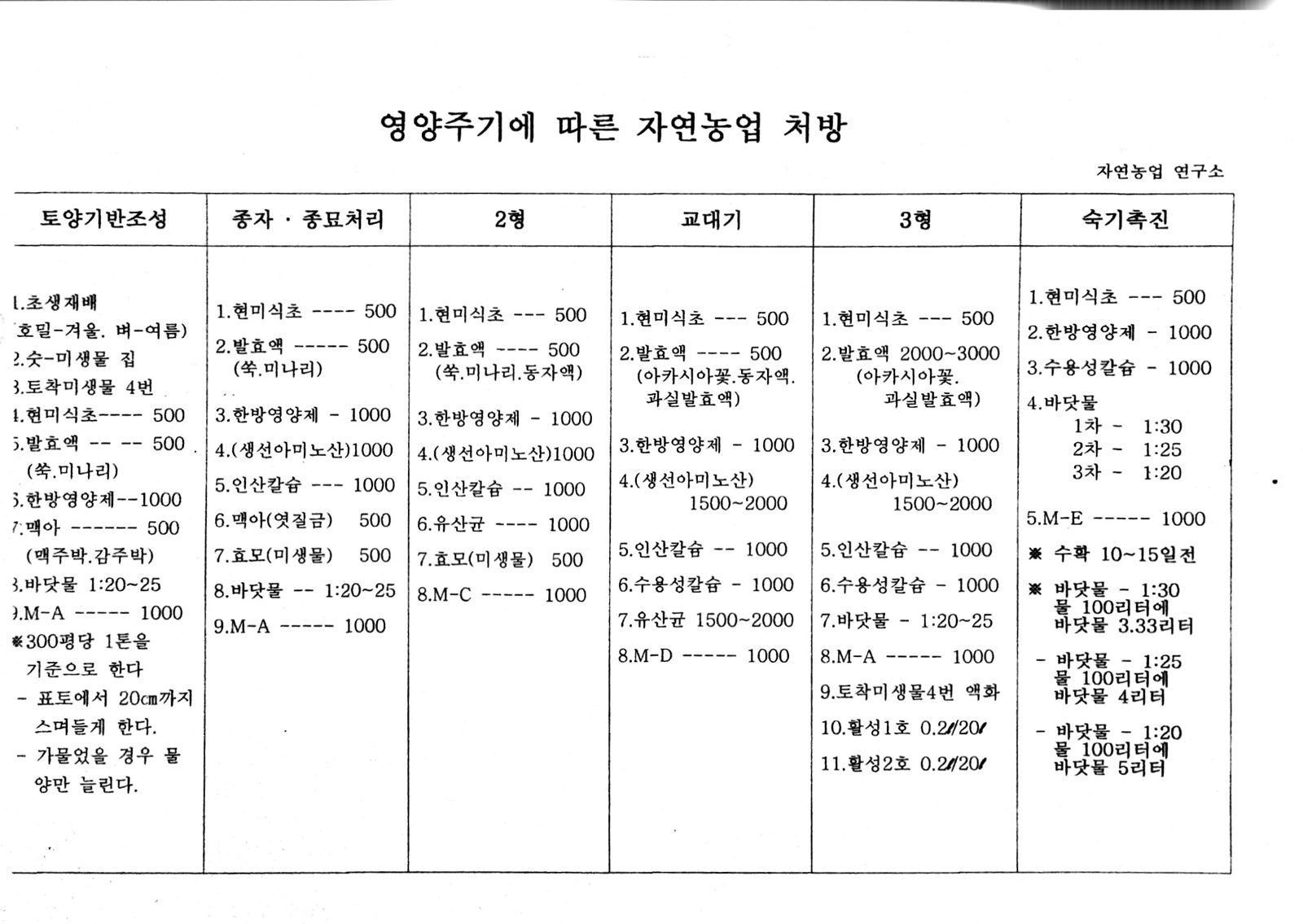
Feed 5–7 Days Early: Ripening, Flower Buds, Leaf Shape

With the prescription handout projected, Cho goes through the stage columns and the ripening spray: seawater 1:30, then 1:25, then 1:20 a week apart, sugar up 2–3%, plus purslane Food at 1:1000 for shine. Then the rule: give each stage's prescription 5 days, or a week, before the stage. Questions follow: flowers are made the summer before, the moon calendar, rice by leaf count, reading the stage from leaf shape, and alternate bearing. It ends at lunch.

Found The prescriptions go by stage: seed and seedling, Type 2 for the trunk, changeover, Type 3 for the fruit, then ripening

timing ripening brix seawater structure food